







Do you want to explore the MOST BEAUTIFUL places in the USA?
This country’s diversity is truly unbelievable. Sunny beaches in California/peaks in the Rockies/the streets of New York City AND quiet canyons out in the Southwest: every corner has something new!!
Here we cover the 25 best places to visit in the USA, why they’re FAMOUS, and what to do there. Whether you’re dreaming about walking through national parks or just relaxing by the ocean, we’ve got the guidance to help plan your trip out.
And with our B1/B2 visa services, we take care of your US tourist visa process: smooth, transparent, and no stress on your end.
Let’s start reading about the famous destinations in the USA…
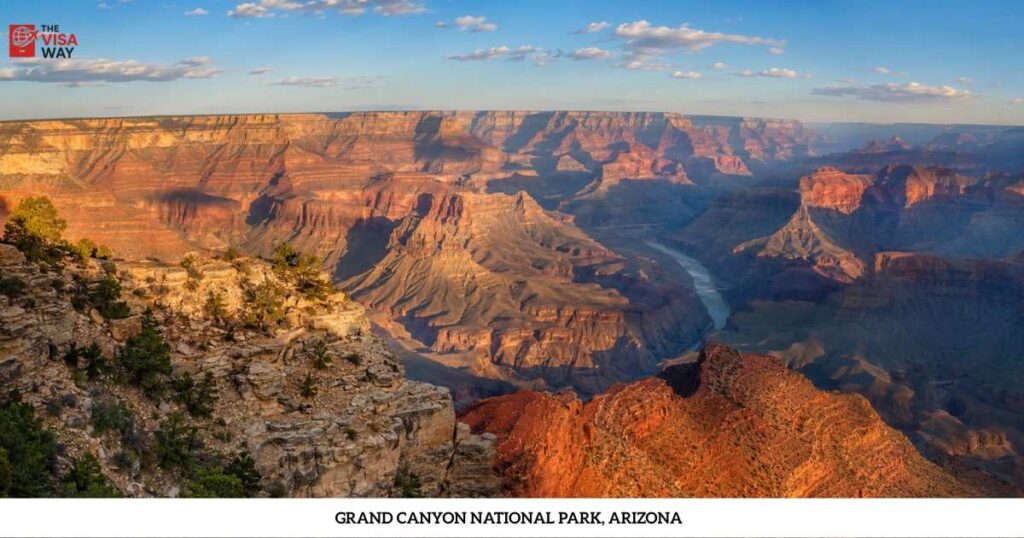
Grand Canyon National Park, Arizona
Why Is the Grand Canyon Famous?
The Grand Canyon is known for being 277 miles long, up to 18 miles wide, and a mile deep. It offers a remarkable, colorful visual record of nearly two billion years of Earth’s geological history.
What Are The Things To Do At The Grand Canyon?
- Walk the South Rim Trail: it’s a mostly flat, covered path that hits several viewpoints along the way, and you can explore without any permit.
- Hike the Bright Angel Trail or South Kaibab Trail: you will see short, decent changes in rock layers.
- Watch sunrise or sunset at Mather Point or Hopi Point: the light on the canyon walls at those times is unbelievable.
- Hop on the free park shuttles: they cover Hermit Road and the Village Route, so you can skip the parking problem.
- Stop at the Desert View Watchtower: a 70-foot stone tower with vast views and Native American artwork inside.
- Book a mule ride: you can take trips partway down or all the way to the canyon floor.
- Raft the Colorado River: rafting from easy half-day floats to multi-day whitewater trips deep in the canyon.
- Look up after dark: the park has very little light pollution, and there’s a star party every June.
- Visit the North Rim (mid-May to mid-October): it has fewer crowds, a higher elevation, and its own trails and views.
- Walk through Grand Canyon Village’s older buildings: El Tovar Hotel and Hopi House are both over 100 years old.
- Join a ranger-led talk or walk: it’s free and covers everything from wildlife to geology to park history.
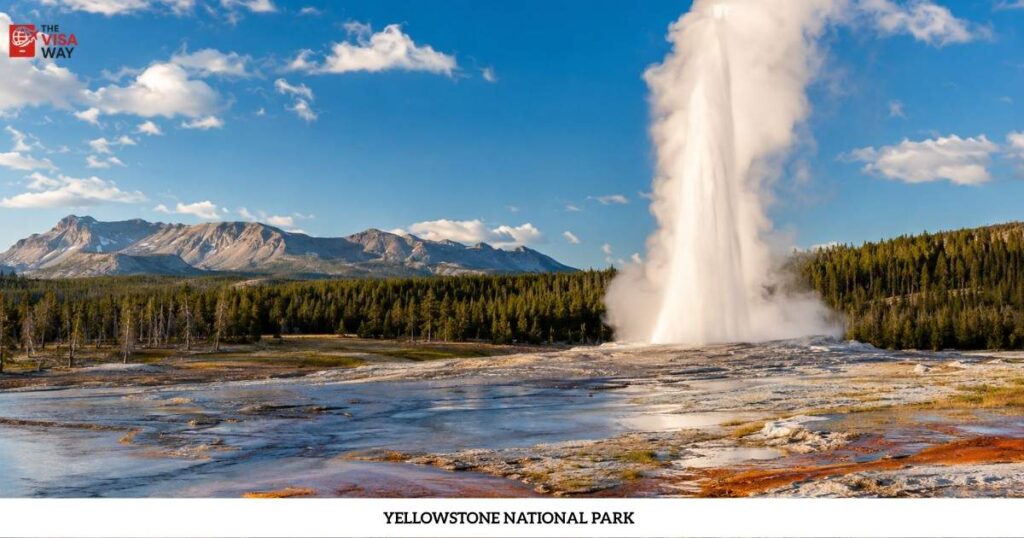
Yellowstone National Park (Wyoming/Montana/Idaho)
Why Is Yellowstone National Park Famous?
Yellowstone National Park is known for being the first national park in the world and also for the world’s largest collection of geysers and hot springs, being an active supervolcano, and hosting a large array of free-roaming wildlife like grizzly bears and bison.
What Things Should You Do At Yellowstone National Park?
- Watch Old Faithful erupt: See the park’s most famous geyser erupt around every 90 minutes. Visit the adjacent boardwalks & the Old Faithful Visitor Education Center to learn about Yellowstone’s geothermal activity.
- Grand Canyon of the Yellowstone: Artist Point and Lookout Point give you the classic views of the Lower Falls; if you want to get closer, walk Uncle Tom’s Trail.
- Wildlife spotting in Lamar and Hayden Valleys: You see bison, elk, and bears in the early morning and dark, so pack binoculars.
- Mammoth Hot Springs: To see the terraced travertine formations very closely, walk the upper and lower wooden stairs
- Yellowstone Lake: The shoreline near Bridge Bay and West Thumb Geyser Basin is worth a drive or a walk; that’s where the geothermal activity meets the lake.
- Walking: There’s something for every fitness level, from short walks like Fairy Falls and Mystic Falls to longer walks like Mount Washburn and Bunsen Peak.
- Fishing: Allowed in designated spots with a Yellowstone fishing permit; catch-and-release is the rule for native species.
- Ranger-led programs: Most visitor centers and campgrounds run evening talks, guided walks, and junior ranger activities.
- Scenic drives: The Grand Loop Road ties together all the major sites. Plan on a full day if you want to drive the whole thing.
- Photography: Sunrise in Lamar Valley and sunset at Grand Prismatic are favorites for catching the light and steam just right.
- Camping and lodging: You can choose from historic houses like Old Faithful Inn to NPS campgrounds; be sure to book well in advance, especially for summer.
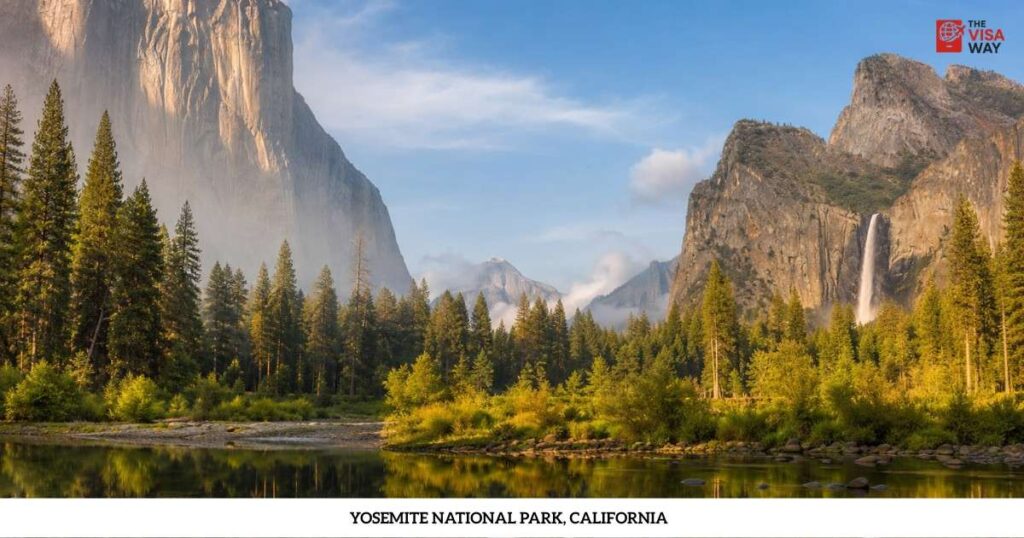
Yosemite National Park, California
Why Is Yosemite National Park Famous?
Yosemite National Park is known for its natural beauty, towering ancient giant sequoia trees, sheer granite cliffs like El Capitan and Half Dome, and large waterfalls.
What Things Should You Do At Yosemite National Park?
- Yosemite Valley floor: You get the classic views of El Capitan, Half Dome, and Bridalveil Fall around by car, shuttle, or bike.
- Hiking: Easy walks like Lower Yosemite Fall and Mirror Lake to tougher routes like the Half Dome cables, Upper Yosemite Fall, and Four Mile Trail.
- Glacier Point: A sunset spot overlooking the valley, Half Dome, and the High Sierra peaks; it’s open seasonally.
- Mariposa Grove: Walk among the giant sequoias, including the Grizzly Giant.
- Tunnel View: The classic overlook, perfect for that first photo as you enter the park.
- Rock climbing: Yosemite’s granite walls are world-famous; the Yosemite Mountaineering School offers guided lessons if you want to try.
- Tuolumne Meadows: Subalpine scenery reached via Tioga Road only in summer and early fall.
- Waterfalls: Best from April to June.
- Wildlife: Look for black bears, mule deer, and birds in the meadows and forests.
- Rafting and swimming: The Merced River is the spot, seasonal in spring and summer.
- Stargazing: There is very little light pollution here, so the night sky really shows up. Glacier Point is my favorite.
- Camping and lodging: Choose anywhere from basic campgrounds to the Ahwahnee Hotel.
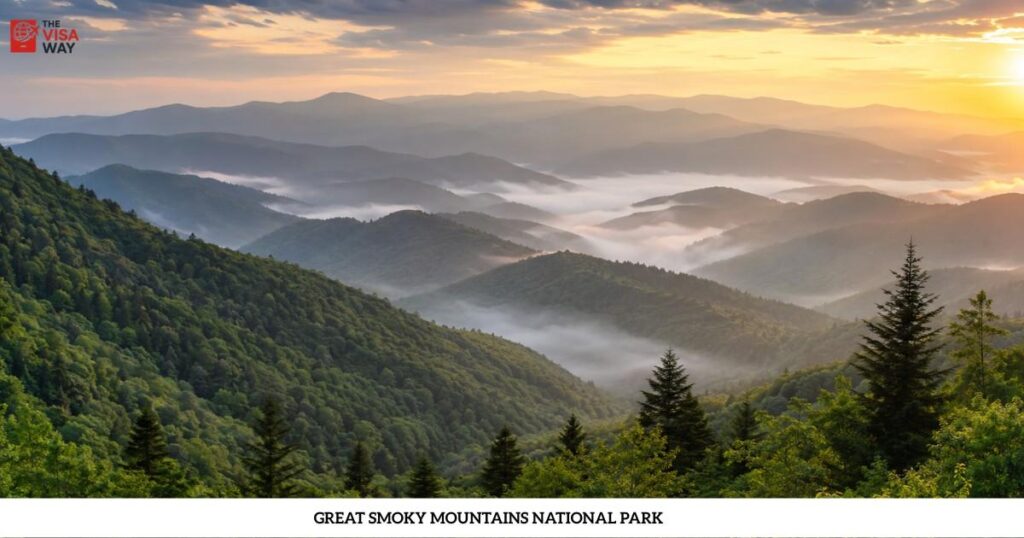
Great Smoky Mountains National Park (Tennessee/North Carolina)
Why Is Great Smoky Mountains National Park Famous?
Great Smoky Mountains National Park is known as America’s most visited national park. It is celebrated for its iconic blue, smoky mist; incredible biodiversity (it is the salamander capital of the world); ancient geological history; and perfectly preserved Appalachian mountain culture.
What Things Should You Do At Great Smoky Mountains National Park?
- Walk Clingmans Dome: The park’s highest point at 6,643 feet, the trail is paved but sharp, leading to an observation tower with panoramic views.
- Drive the Cades Cove Loop: This 11-mile, one-way scenic drive is ideal for spotting wildlife (black bears, deer, and wild turkeys) and passing historic homesteads.
- Visit Laurel Falls: A popular 2.6-mile round-trip walk to an 80-foot waterfall, paved, but expect company on the trail.
- Explore Roaring Fork Motor Nature Trail: A quieter driving loop near Gatlinburg, with old cabins and shorter waterfall walks along the way.
- Walk Charlie’s Bunion or Alum Cave Trail: Longer, tougher routes if you’re an experienced walker looking for rough land and rock outcrop views.
- Tour the Mountain Farm Museum and Mingus Mill: Near the Oconaluftee Visitor Center, with preserved log structures and a working gristmill.
- Fish the park’s streams: Over 2,900 miles of streams here support trout fishing; you’ll need a Tennessee or North Carolina fishing license.
- Bike Cades Cove: Vehicle-free mornings (usually Wednesdays, seasonally) make the area a favorite for cyclists.
- Camp overnight: Developed campgrounds like Elkmont, Cades Cove, and Smokemont are options, plus backcountry sites. Permits are required for backcountry.
- Catch the fall foliage or spring wildflowers: The park’s known for both; peak color usually hits mid-to-late October, and wildflowers bloom March through May.
- Stargaze or catch the synchronous fireflies: A rare firefly synchronization event happens near Elkmont each year, usually late May to early June. You’ll need a lottery-based permit.
- Stop at the visitor centers: Sugarlands, Oconaluftee, and Cades Cove all offer maps, exhibits, and ranger guidance.
Zion National Park, Utah
Why Is Zion National Park Famous?
Zion National Park in Utah is known for its towering, vibrant red and white sandstone cliffs and dramatic river canyons carved by the Virgin River. It is globally known for world-class, thrilling walks like The Narrows (wading through a narrow river canyon) & the steep, sheer-drop ascent to Angel’s Landing.
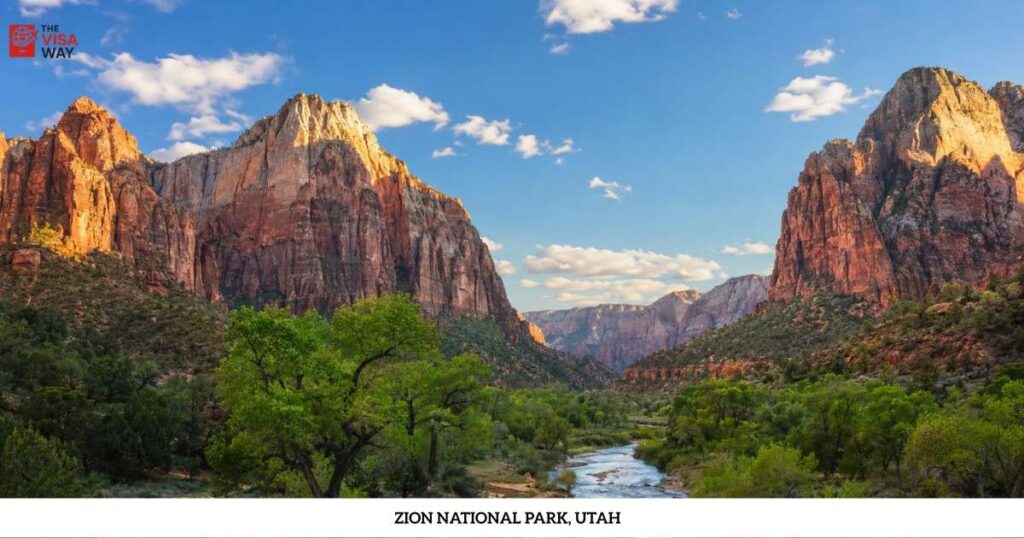
What Things Should You Do At ZionNational Park?
- Walk Angels Landing: A tough 5.4-mile round trip with chain-assisted sections along a narrow ridge. You’ll need a permit since demand is high.
- Walk The Narrows: You’re paddling through the Virgin River between towering canyon walls, so wear proper water shoes and check the flash flood forecast first.
- Walk the Riverside Walk: An easy, paved 2.2-mile round trip along the river, great for families, and it is also the gateway to The Narrows.
- Explore Emerald Pools Trail: A moderate walk to waterfalls and pools, with lower, middle, and upper sections depending on how much of a challenge you want.
- Drive the Zion Canyon Scenic Drive: The park covers this route for most of the year, taking you past the canyon’s main landmarks.
- Visit Kolob Canyons: A quieter corner of the park in the northwest, with its own scenic drive and trails.
- Walk Observation Point: A demanding trail, but the panoramic views over Zion Canyon are often considered even better than Angels Landing’s.
- Explore Canyon Overlook Trail: This shorter, family-friendly trail is located near the east entrance and offers canyon views that are above head height.
- Stargaze: Zion’s a designated Dark Sky Park, so evenings are particularly rewarding for astronomy or night photography.
- Ride horseback: Guided trail rides run seasonally near the canyon floor.
Glacier National Park, Montana
Why Is Glacier National Park Famous?
Glacier National Park in Montana is known for the glacier-carved peaks, turquoise lakes, and a wild ecosystem where grizzly bears, moose, and mountain goats still roam free. Often called the “Crown of the Continent,” it spans over a million acres.
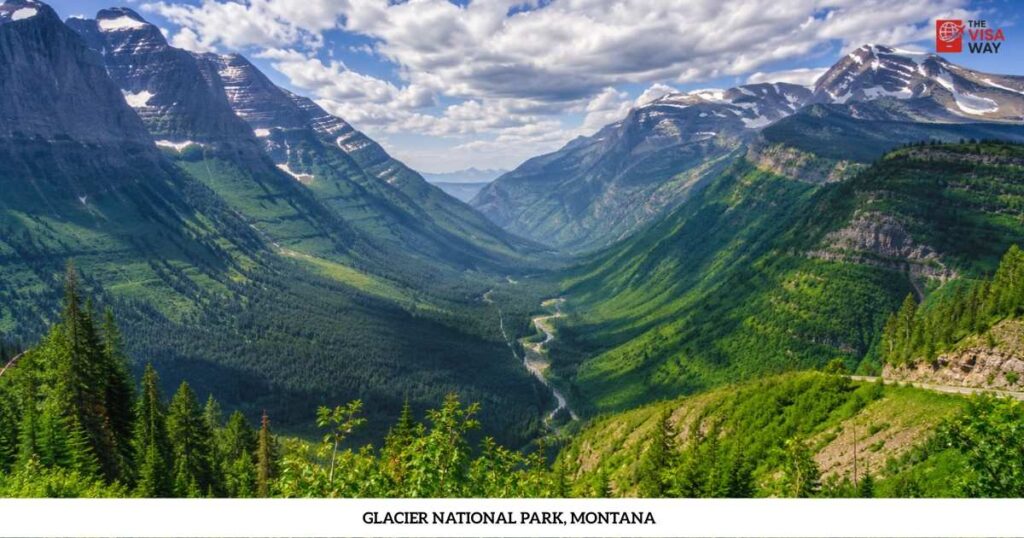
What Things Should You Do At Glacier National Park?
- Drive Going-to-the-Sun Road: A 50-mile highway crossing the Continental Divide at Logan Pass, with some of the most dramatic mountain views in the park.
- Wildlife viewing: Mountain goats, bighorn sheep, grizzly bears, and moose show up most in early morning or evening.
- Boat tours: A guided cruise on Lake McDonald, St. Mary Lake, or one of Many Glacier’s lakes gets you close to the surrounding peaks.
- Backcountry camping: With a permit, head into the remote areas for a multi-day trek and a more profound wilderness experience.
- Horseback riding: Local outfitters run guided rides through forested trails and alpine meadows.
- Ranger-led programs: talks, guided walks, evening presentations on the park’s geology and wildlife.
- Photography: Capture stunning scenery at Wild Goose Island Overlook, Logan Pass, Lake McDonald, St. Mary Lake, and Two Medicine.
- Winter activities: come during colder months for snowshoeing and cross-country skiing in select accessible areas.
Grand Teton National Park, Wyoming
Why Is Grand Teton National Park Famous?
Grand Teton National Park in Wyoming is known for that jagged Teton mountain range, alpine lakes like Jenny Lake, and lots of wildlife. The peaks rise straight up from the Jackson Hole valley floor with no foothills in between, which makes for iconic photo spots like the Snake River Overlook.
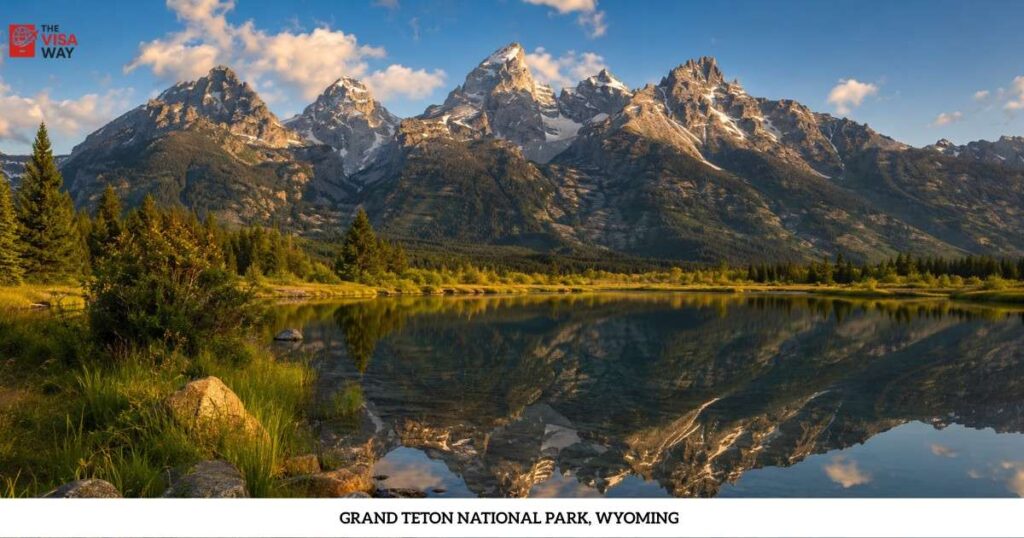
What Things Should You Do At Grand Teton National Park?
- Wildlife viewing: moose, elk, bison, and black bears show up often near Oxbow Bend and Antelope Flats.
- Scenic drives: Teton Park Road and Signal Mountain Summit Road both give panoramic mountain views.
- Boating and kayaking: Jackson Lake and Jenny Lake, open to canoeing, kayaking, and motorized boats.
- Photography: sunrise at Oxbow Bend and Schwabacher Landing, classic spots for the Teton Range.
- Climbing and mountaineering: Grand Teton itself is a well-known technical climb for experienced mountaineers.
- Horseback riding: park concessioners offer guided trail rides.
- Camping: developed campgrounds and backcountry permits cover both car camping and backpacking.
- Winter activities: once the snow piles up, cross-country skiing and snowshoeing become options.
Denali National Park, Alaska
Why Is Denali National Park Famous?
Denali National Park is famous for Mount Denali, North America’s tallest peak at 20,310 feet. It’s also known for the massive 6-million-acre stretch of untouched Arctic wilderness; iconic wildlife like grizzly bears, wolves, moose, and caribou; and that off-trail walking, bus-only way of exploring the park.
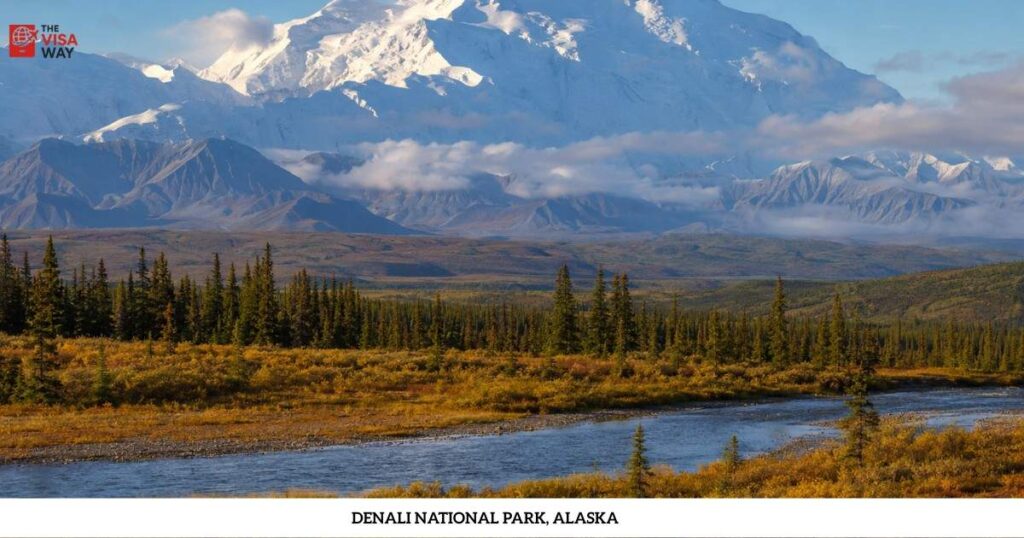
What Things Should You Do At Denali National Park?
- Wildlife viewing: Ride the park shuttle along the 92-mile Park Road for a good shot at spotting grizzly bears, caribou, moose, Dall sheep, and wolves.
- Denali views: On a clear day, you can see the peak itself from Eielson Visitor Center or Wonder Lake.
- Flightseeing tours: small aircraft tours, aerial views of the Alaska Range, sometimes a glacier landing if weather allows.
- Sled dog demonstrations: Head to park headquarters and watch rangers demonstrate the working sled dogs used for winter patrols.
- Camping: Six campgrounds in the park, some you can drive right to, others more remote tent-only spots.
- Rafting: Just outside the park boundary, the Nenana River has both whitewater and scenic float trips.
- Ranger programs: Visitor centers run talks, guided walks, and evening programs on the park’s ecology and history.
- Backcountry exploration: get a permit and go off-trail through Denali’s six million acres for something more immersive.
Bryce Canyon National Park, Utah
Why Is Bryce Canyon National Park Famous?
Bryce Canyon is famous for having the largest concentration of hoodoos anywhere on Earth: those tall, colorful, irregular rock spires carved out by millions of years of wind and water erosion. It’s also known for the sweeping natural amphitheaters and clear dark skies that are perfect for stargazing.
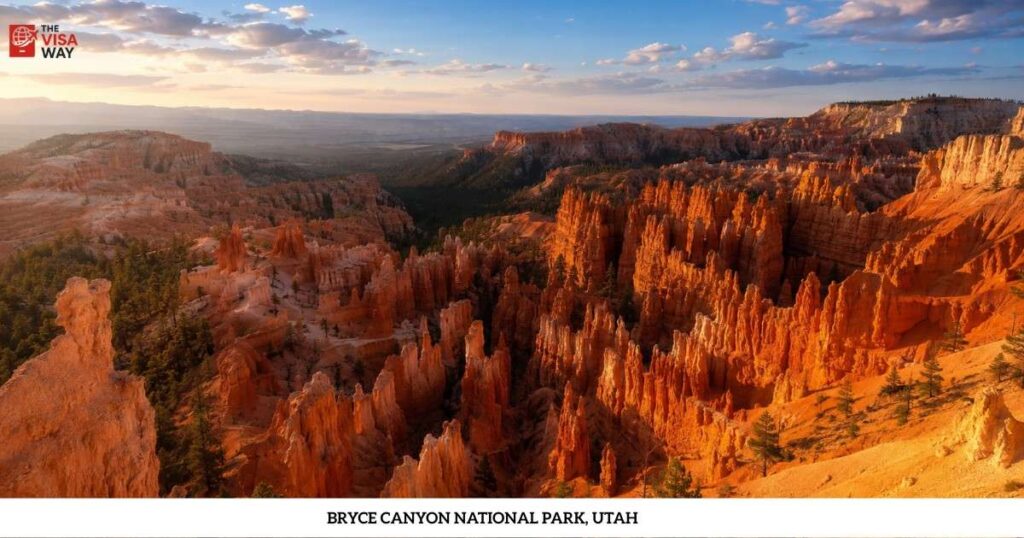
What Things Should You Do At Bryce Canyon National Park?
- Navajo Loop Trail: a popular short walk that drops you down into the canyon among the hoodoo formations.
- Queen’s Garden Trail: The easiest way into the canyon floor, especially suited for families and first-timers.
- Fairyland Loop Trail: longer, less crowded, more solitude, and some dramatic rock formations.
- Bryce Point: wide-angle vantage point looking out over the whole amphitheater.
- Inspiration Point: a multi-tiered viewpoint that shows rows of hoodoos from different elevations.
- Rim Trail: relatively flat path connecting the major overlooks along the canyon edge.
- Horseback riding: Outfitters like Canyon Trail Rides run guided trips through the canyon floor.
- Stargazing: There is barely any light pollution, making it one of the best dark-sky parks in the country.
- Ranger programs: Park rangers lead talks and guided walks on geology and ecology.
- Winter activities: When the canyon’s snow-covered, snowshoeing and cross-country skiing are options.
- Mossy Cave Trail: short, family-friendly walk to a small waterfall and cave formation.
Death Valley National Park (California/Nevada)
Why Is Death Valley National Park Famous?
Death Valley is famous as the hottest, driest, lowest place in North America. It holds the record for the highest air temperature ever reliably recorded on Earth: 134°F (56.7°C). The landscape looks almost otherworldly, with giant dunes, colorful badlands, and salt flats everywhere.
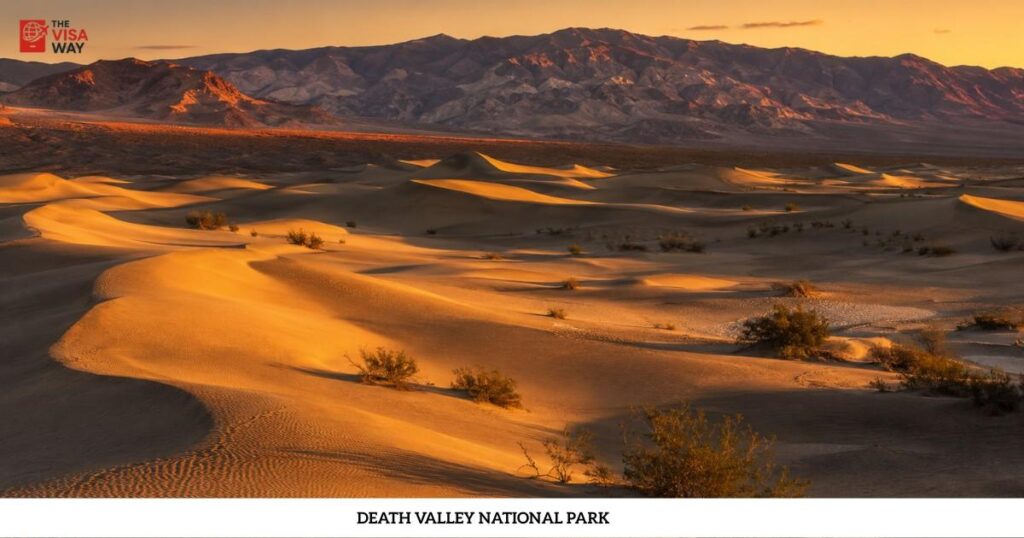
What Things Should You Do?
- Badwater Basin: walk out onto the lowest point in North America, 282 feet below sea level, on a massive salt flat.
- Zabriskie Point: dramatic badlands and golden eroded hills, especially striking at sunrise.
- Artist’s Palette: scenic drive past mineral-streaked hills in pink, green, and purple shades.
- Mesquite Flat Dunes: walk among the rolling dunes; dawn or dusk is best for photos.
- Dante’s View: a panoramic overlook of the whole valley from over 5,000 feet up.
- Furnace Creek: the main hub of the park, with a visitor center, museum, and excellent place to get oriented.
- Golden Canyon: moderate walk through narrow, colorful canyon walls.
- Devil’s Golf Course: jagged salt crystal formations across a rugged, strange-looking landscape.
- Ubehebe Crater: a half-mile-wide volcanic crater with trails along the rim and down to the floor.
- Racetrack Playa: a remote dry lakebed where you can see the famous “sailing stones”; a high-clearance vehicle is recommended to get there.
- Titus Canyon: a one-way backcountry drive through narrow canyon passages, passing old ghost town ruins.
- Stargazing: Gold Tier International Dark Sky Park. The night sky here is exceptional.
- Scotty’s Castle area: historic 1920s Spanish-style mansion, worth checking current accessibility since it’s had flood damage.
- Natural Bridge: short walk to a natural rock bridge formation.
Arches National Park, Utah
Why Is Arches National Park Famous?
Arches National Park in Utah is famous for having the highest concentration of natural stone arches on Earth – over 2,000 documented. Wind and erosion carved this red-rock landscape over millions of years, and it’s also got massive balanced rocks and tall pinnacles scattered around them.
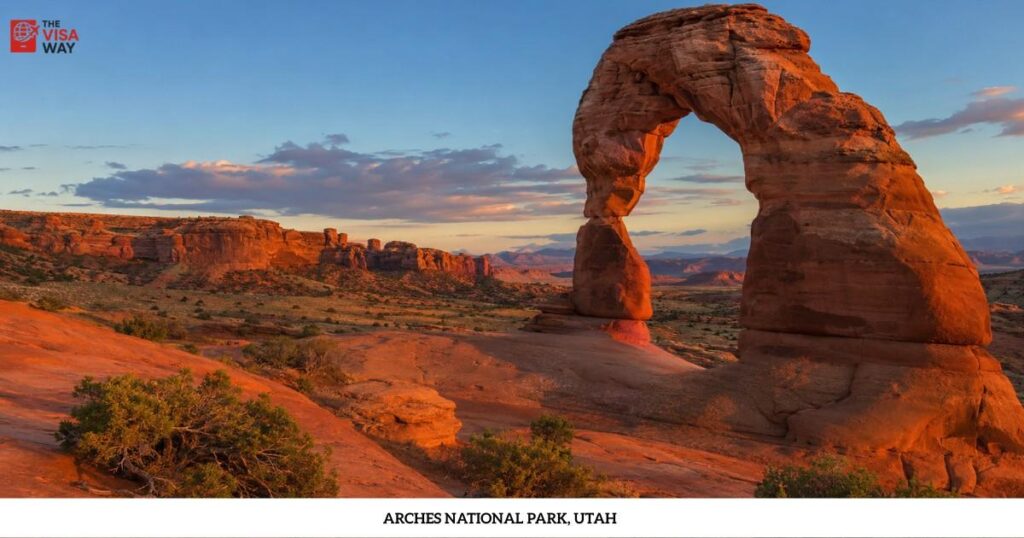
What Things Should You Do At Arches National Park?
- Delicate Arch: a 3-mile round-trip walk to the park’s iconic freestanding arch, best at sunset.
- Windows Section: A short, easy walk to North Window, South Window, and Turret Arch.
- Fiery Furnace: a maze of narrow sandstone canyons; go on a guided ranger walk or self-guided with a permit.
- Devils Garden is a longer trail that passes several arches, including Landscape Arch, which is one of the longest natural stone spans anywhere.
- Balanced Rock: a quick loop trail around a massive boulder perched on a thinning pedestal.
- Park Avenue: Walk through a canyon lined with towering rock fins that look like a city skyline.
- Scenic Drive: 18-mile paved road connecting the park’s major viewpoints and trailheads.
- Stargazing: This designated International Dark Sky Park has minimal light pollution and is ideal for night photography.
- Rock climbing and canyoneering: allowed in select areas for experienced climbers with the right permits.
- Ranger programs: seasonal talks and guided walks on geology, wildlife, and desert ecology.
- Camping: Devil’s Garden Campground is the only option within the park, so be sure to book well in advance.
Rocky Mountain National Park, Colorado
Why Is Rocky Mountain National Park Famous?
Rocky Mountain National Park in Colorado is known for towering alpine peaks, glacial lakes, and Trail Ridge Road, the highest continuously covered highway in North America. It covers 415 square miles and is a big draw for walking, wildlife viewing, and seeing those high-altitude ecosystems up close.
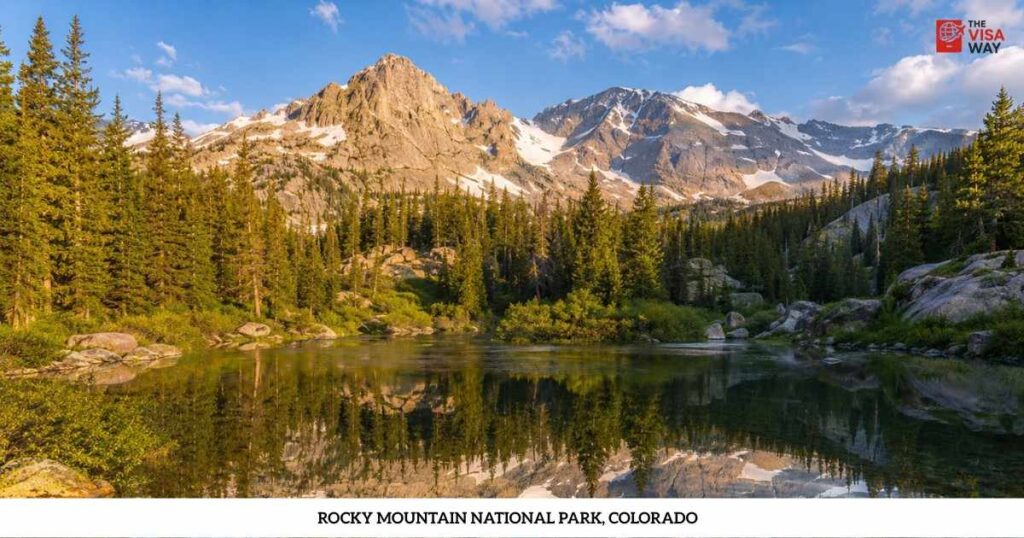
What Things Should You Do?
- Trail Ridge Road: Drive the highest continuous paved road in the US, climbing over 12,000 feet, with sweeping alpine views.
- Bear Lake: easy walk around a scenic subalpine lake, suitable for all fitness levels.
- Emerald Lake Trail: moderate, 3.6-mile round trip, passing Nymph and Dream Lakes on the way to Emerald Lake.
- Longs Peak: a challenging full-day climb to a 14,259-foot summit, only for experienced walkers.
- Sprague Lake: flat, wheelchair-accessible loop, good for families and easy walks.
- Wildlife viewing: elk herds common in Moraine Park and Horseshoe Park, especially during the fall rut.
- Alberta Falls: short 1.6-mile round trip to a waterfall, good option if you’re just starting.
- Old Fall River Road: a one-way gravel road, a quieter and more rugged alternative to Trail Ridge Road.
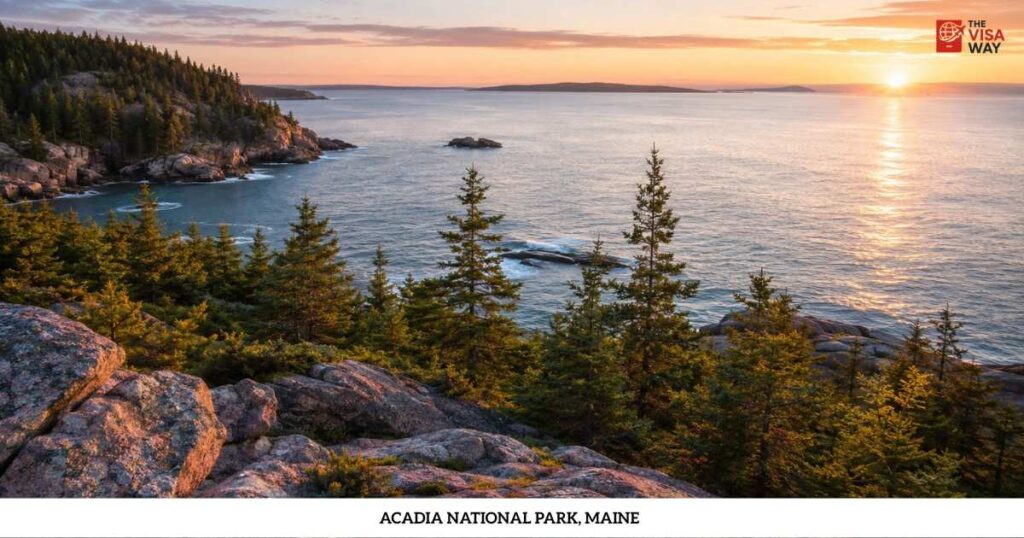
Acadia National Park, Maine
Why Is Acadia National Park Famous?
Acadia National Park is famous as the first national park east of the Mississippi and the only one in Maine. Over 3 million people visit every year for the rugged ocean-meets-mountain scenery, the 45-mile carriage roads, and Cadillac Mountain, which is one of the first spots in the US to see sunrise during certain times of year.
What Things Should You Do?
- Cadillac Mountain: Walk or drive up for sunrise, one of the first places on the East Coast to see it.
- Park Loop Road: a scenic 27-mile drive past cliffs, forests, and ocean overlooks.
- Jordan Pond: an easy trail with views of the “Bubbles” mountains; stop at Jordan Pond House nearby for popovers and tea.
- Thunder Hole: a rock inlet where waves crash hard, best at mid-to-high tide.
- Bar Harbor: a coastal town nearby, ideal for dining, shopping, and whale-watching tours.
- Beehive Trail: a steep, iron-rung climb for experienced walkers who are okay with some exposure in exchange for the views.
- Sand Beach: a rare sandy beach on the Maine coast, ideal for a quick swim or walk.
- Bass Harbor Head Light: a historic lighthouse on the quieter side of Mount Desert Island.
- Carriage Roads: 45 miles of car-free paths; bike, walk, or ride horseback.
- Otter Cliff: coastal granite cliffs, popular with rock climbers and photographers.
- Acadia Bike Rentals: an easy way to explore the carriage roads if you don’t have your own bike.
- Schoodic Peninsula: a quieter part of the park, ideal if you want a less crowded coastal experience.
- Stargazing: clear night skies away from city lights, especially near Cadillac Mountain.
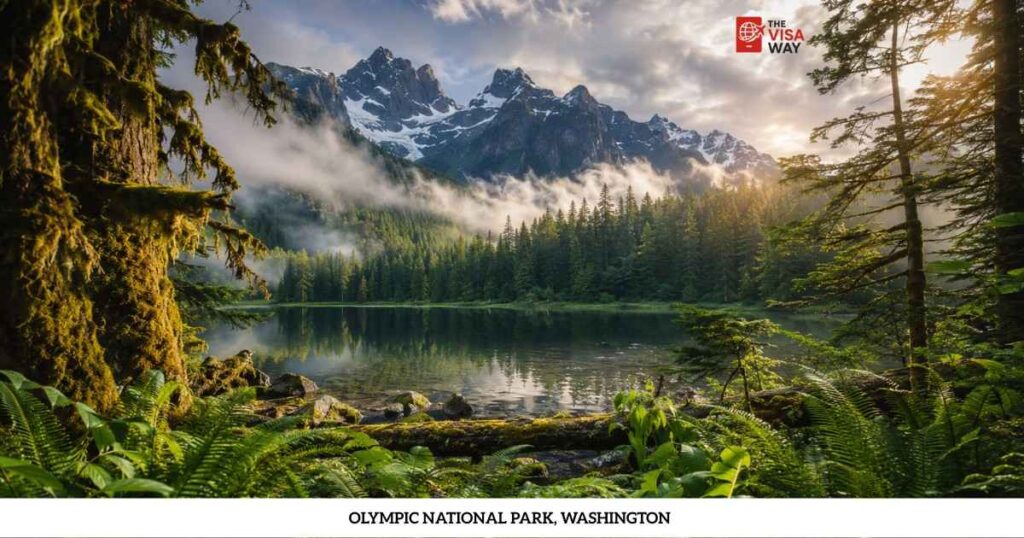
Olympic National Park, Washington
Why Is Olympic National Park Famous?
Olympic National Park in Washington is known for packing three totally different environments into one park: glacier-capped mountains, rugged Pacific coastline, and temperate rainforest, all in the same wilderness. It’s also a UNESCO World Heritage Site. Check out the full world heritage list .
What Things Should You Do At Olympic National Park?
- Hoh Rain Forest: Walk the Hall of Mosses and Spruce Nature Trails through the moss-covered old-growth forest.
- Hurricane Ridge: Drive up for alpine views, wildflower meadows in summer, and snowshoeing when winter arrives.
- Ruby Beach: Great for photographing sea stacks and driftwood at low tide.
- Rialto Beach: Walk along the coast to Hole-in-the-Wall.
- Lake Crescent: Kayak or swim in this deep-blue, glacially carved lake.
- Sol Duc Falls: Short forested trail leads to a multi-tiered waterfall.
- Sol Duc Hot Springs: a perfect spot to soak after a long day of walking.
- Marymere Falls: easy, family-friendly trail to a 90-foot waterfall.
- Staircase Rapids: old-growth forest along the North Fork Skokomish River.
- Enchanted Valley: a multi-day backpacking route into a remote glacial valley.
- Second Beach: walk through the forest to a quieter stretch of coastline.
- Deer Park: rugged drive up, rewarded with panoramic mountain views and fewer people around.
- Wildlife viewing: watch for Roosevelt elk, black bears, and marmots throughout the park.
- Tide pooling: explore marine life along the rocky coastal areas at low tide.
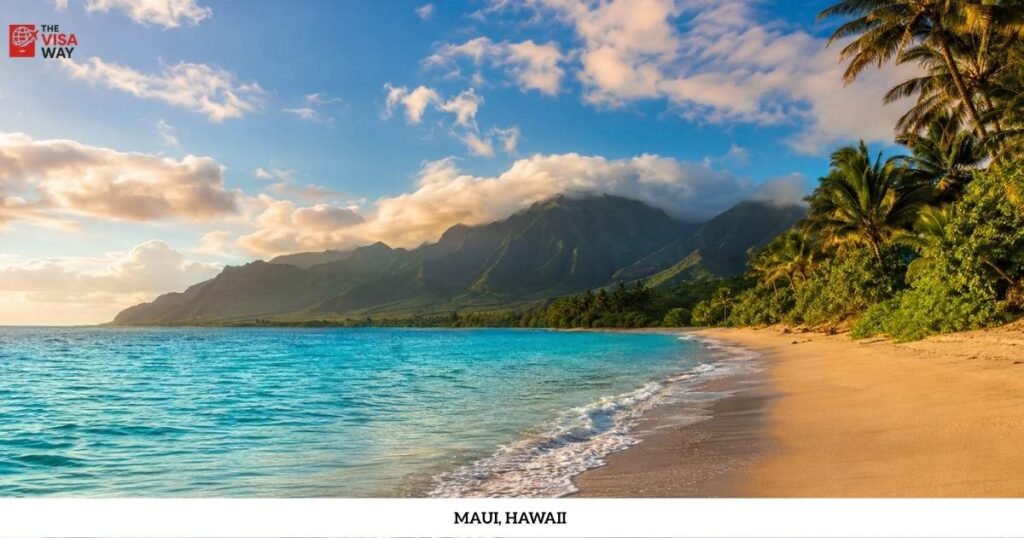
Maui, Hawaii
Why Is Maui Famous?
Maui is the second-largest Hawaiian island, known as “The Valley Isle.” It’s globally known for the white-sand beaches, the Road to Hana drive, and sunrise views from the top of Haleakalā volcano. It is also a top spot for whale watching during migration season and for traditional Polynesian luaus.
What Things Should You Do in Maui?
- Beaches: Kaanapali Beach for swimming and sunset views, Wailea Beach for calm water and resort access, and Hookipa Beach to watch windsurfers and sea turtles.
- Road to Hana: a scenic coastal drive featuring stops at waterfalls, black sand beaches, rainforest lookouts, approximately 600 curves, and 59 bridges.
- Haleakala National Park: Catch sunrise at the summit, walk the Sliding Sands Trail, and enjoy spectacular stargazing since there’s barely any light pollution.
- Snorkeling and diving: Molokini Crater for clear water and marine life, Honolua Bay for coral reefs, and Black Rock at Kaanapali.
- Whale watching: boat tours out of Lahaina or Maalaea, December through April when the humpbacks pass through.
- Lahaina town: Historic Front Street has shops, galleries, and restaurants (rebuilding is still ongoing after the 2023 wildfire).
- Iao Valley State Park: A short walk gets you a view of the Iao Needle rock formation.
- Water sports: surfing lessons near Lahaina, windsurfing, and kitesurfing at Kanaha Beach.
- Luau experiences: several resorts do traditional Hawaiian feasts with music and hula performances.
- Upcountry Maui: lavender farms, wineries, and the town of Makawao, which has its own paniolo (cowboy) feel to it.
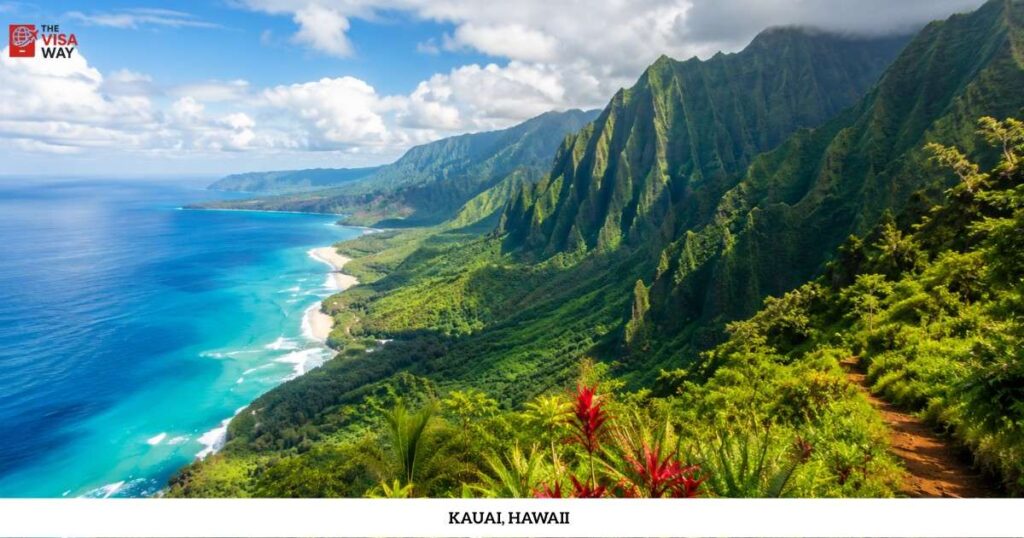
Kauai, Hawaii
Why Is Kauai Famous?
Kauai, Hawaii, is known as the “Garden Isle”: green rainforests, emerald cliffs, and that kind of dramatic natural beauty. It’s famous for Waimea Canyon, often called the “Grand Canyon of the Pacific,” and the towering Nā Pali Coast peaks, and it’s also where they filmed Jurassic Park.
What Things Should You Do In Kauai?
- Na Pali Coast: Walk the Kalalau Trail or see the cliffs by boat or helicopter, the most dramatic scenery on the island.
- Waimea Canyon: Drive up to the lookout points; sunrise or sunset is the best time.
- Hanalei Bay: Swim, paddleboard, or just relax on this crescent beach on the north shore.
- Wailua River: Kayak or take a boat tour to Fern Grotto and the waterfalls nearby.
- Poipu Beach: calm water for snorkeling; watch for Hawaiian monk seals resting on the sand.
- Kilauea Point National Wildlife Refuge: historic lighthouse; watch for seabirds, dolphins, and humpback whales in season.
- Opaekaa Falls: easy roadside stop, good photos, short walk.
- Tunnels Beach: snorkel among coral reefs, with mountains in the background.
- Spouting Horn: Watch ocean water shoot through a lava tube formation near Poipu.
- Koke’e State Park: walking trails, cooler up here because of the elevation.
- Old Koloa Town: a historic plantation-era district with local shops and restaurants.
- Luau experience: a traditional Hawaiian feast with music and dance, ideal for some cultural insight.
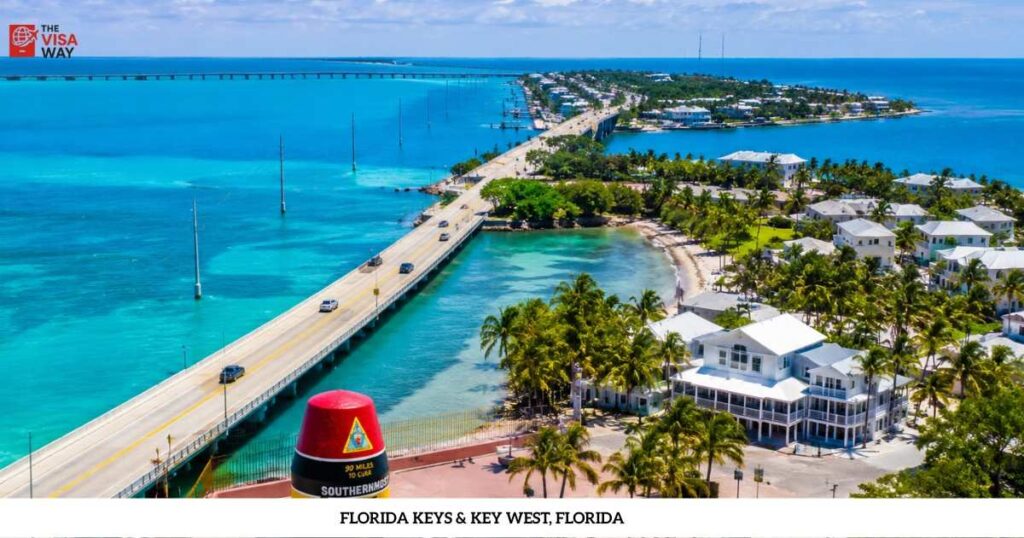
Florida Keys & Key West, Florida
Why Are Florida Keys and Key West Famous?
The Florida Keys and Key West are known for the Overseas Highway, that 113-mile drive over 42 bridges, plus the coral reefs for diving and Key West’s Duval Street nightlife. Ernest Hemingway lived here too, and it’s where key lime pie actually originated.
What Things Should You Do In The Florida Key And Key West?
- Snorkeling/diving: John Pennekamp Coral Reef State Park, Looe Key Reef.
- Sunset viewing: the nightly sunset celebration at Mallory Square, a Key West staple.
- Historic sites: Ernest Hemingway Home and Museum, Truman Little White House.
- Water sports: kayak through the mangrove tunnels, or paddleboard around Key West Harbor.
- Wildlife encounters: Dolphin Research Center, plus Key deer at the National Key Deer Refuge on Big Pine Key.
- Island hopping: drive the Overseas Highway, stopping at Bahia Honda State Park and Islamorada on the way.
- Nightlife: Duval Street bars, live music at Green Parrot Bar.
- Beaches: Bahia Honda State Park, Fort Zachary Taylor Historic State Park.
- Culinary experiences: key lime pie, fresh stone crab in season, and plenty of waterfront seafood spots.
- Sailing/boat tours: sunset catamaran cruises and glass-bottom boat tours over the reef.
- Cultural exploration: Key West Cemetery, Mel Fisher Maritime Museum, art galleries scattered through Old Town.
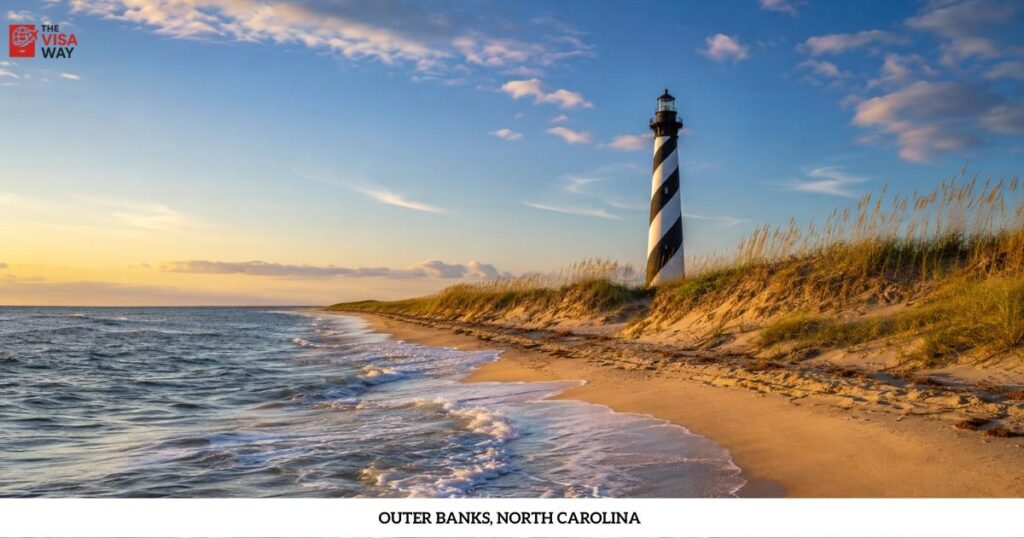
Outer Banks, North Carolina
Why Is Outer Banks Famous?
The Outer Banks, North Carolina, is a 200-mile stretch of barrier islands, known for the beaches, the history, and its pop culture spotlight. This area is where the Wright brothers pulled off the first powered flight and where the “Lost Colony” of Roanoke vanished, and it’s also the setting for that Netflix show Outer Banks.
What Things Should You Do At The Outer Banks?
- Wright Brothers National Memorial: The Kill Devil Hills site where the Wright brothers flew in 1903 features a museum and a reproduction of their flyer.
- Cape Hatteras Lighthouse: Climb the tallest brick lighthouse in the country for panoramic views of the Atlantic coast.
- Wild Horses of Corolla: guided tour to see the wild Spanish mustangs roaming the northern beaches.
- Jockey’s Ridge State Park: the tallest natural dune system on the East Coast, popular for hang gliding and sandboarding.
- Beach days: wide, uncrowded beaches along Nags Head, Duck, & Corolla.
- Fishing charters: book a deep-sea or inshore trip out of Oregon Inlet or Hatteras.
- Cape Hatteras National Seashore: a scenic byway connecting beaches, dunes, and maritime forests.
- Ocracoke Island: A ferry ride gets you to this quieter village, known for its charm and Blackbeard history.
- Watersports: kiteboarding, kayaking, and stand-up paddleboarding in the Pamlico and Currituck Sounds.
- Roanoke Island Festival Park: interactive exhibits on the Lost Colony and early English settlement.
- Shipwreck diving: charter dives into the “Graveyard of the Atlantic” and its old wrecks.
- Local seafood dining: fresh catches at waterfront restaurants all along the region.
- Bodie Island Lighthouse: Tour this black-and-white striped lighthouse and the trails around it.
- Sunset cruises: evening boat tours on the sound side, a lovely way to see the coastal scenery.
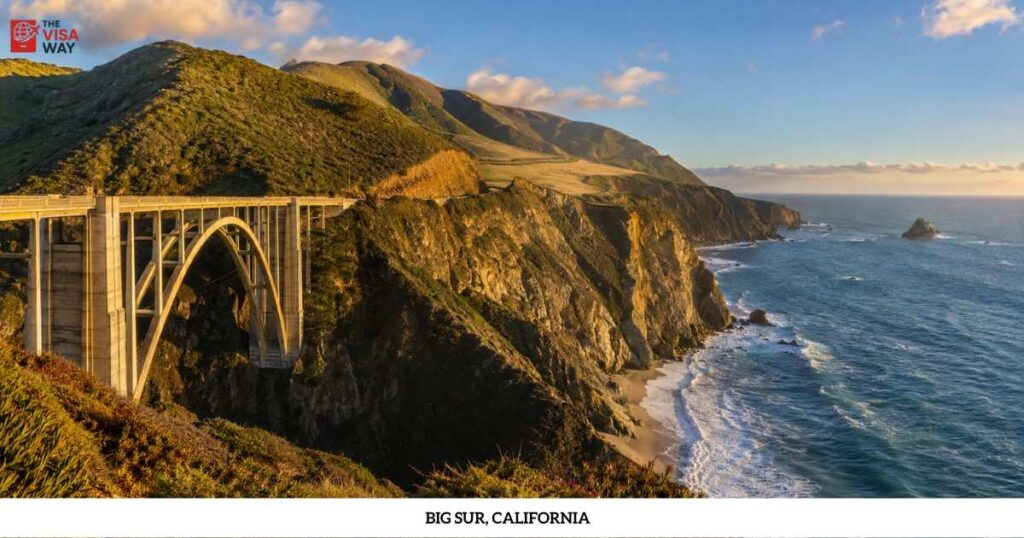
Big Sur, California
Why Is Big Sur Famous?
Big Sur is known for those dramatic ocean views, where the Santa Lucia Mountains just drop straight into the Pacific. It’s got towering redwood forests, that winding Highway 1 drive, and wild, untouched scenery that’s been pulling in artists, writers, and road-trippers for years.
What Things Should You Do At Big Sur?
- McWay Falls: An 80-foot waterfall dropping right onto the beach at Julia Pfeiffer Burns State Park; a short, easy trail gets you there.
- Bixby Creek Bridge: an iconic arch bridge on Highway 1, a must-stop for photos and coastal views.
- Pfeiffer Big Sur State Park: Walk through redwood groves; trails range from simple walks to steeper climbs.
- Point Lobos State Natural Reserve: Just north of Big Sur, tide pools, sea lion colonies, and coastal trails.
- Garrapata State Park: secluded beaches, coastal bluff trails, and fewer people than the bigger spots.
- Andrew Molera State Park: walk, horseback ride, or walk the beach where the Big Sur River meets the ocean.
- Pfeiffer Beach: known for purple sand and rock formations like Keyhole Arch.
- Esalen Institute: Book a session at the clifftop hot springs, though availability varies.
- Nepenthe Restaurant: Dine on the terrace, where sweeping ocean views accompany your meal.
- Henry Miller Memorial Library: a quirky cultural spot and a bookstore worth browsing.
- Limekiln State Park: old lime kilns and a waterfall tucked inside a redwood canyon.
- Whale watching: Gray whales migrate offshore, best from December through April.
- Scenic driving: Highway 1 itself, one of the most scenic coastal drives anywhere.
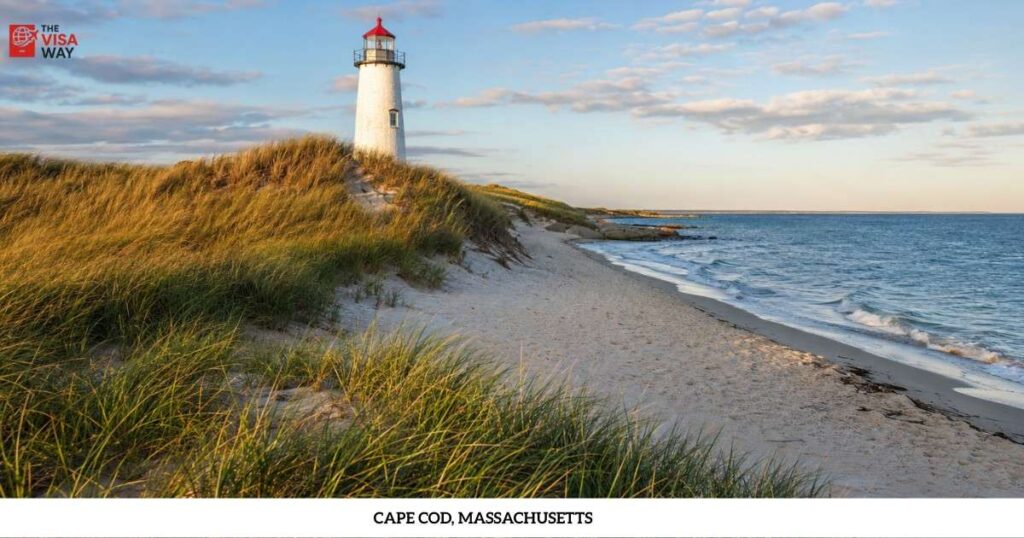
Cape Cod, Massachusetts
Why Is Cape Cod Famous?
Cape Cod, Massachusetts, is known for the 40-mile Cape Cod National Seashore, all that pristine beach, and classic New England charm. It’s a top summer spot too: fresh seafood, old lighthouses, cranberry bogs, and the whole Kennedy family connection.
What Things Should You Do At Cape Cod?
- Beaches: Coast Guard Beach, Nauset Beach, and Craigville Beach are excellent for swimming, sunbathing, and surfing.
- Whale watching: boat tours out of Provincetown or Barnstable; you’ll see humpback and finback whales.
- Cape Cod National Seashore: 40 miles of protected dunes, marshes, and forest trails. Walk or bike through it.
- Provincetown: galleries, shops, and a lively arts scene right at the tip of the Cape.
- Cape Cod Rail Trail: 22-mile paved cycling path connecting Dennis to Wellfleet.
- Lighthouses: Nauset Light, Highland Light, and Chatham Light are all worth photographing for the coastal views.
- Seafood dining: lobster rolls, clam chowder, and oysters at shacks and restaurants all over the Cape.
- Martha’s Vineyard or Nantucket day trip: Catch a ferry from Hyannis and spend the day on either island.
- Kayaking and paddleboarding: calm bays like Pleasant Bay or the Bass River, ideal for paddling.
- Sandwich Village: the oldest town on the Cape, home to the Sandwich Glass Museum and a historic boardwalk.
- Cranberry bog tours: Learn about the cranberry harvesting tradition; the best time is fall.
- Golf courses: Play a round at one of the scenic seaside courses on the Cape.
Sedona, Arizona
Why Is Sedona Famous?
Sedona, Arizona, is known for the red rock landscapes, the whole “energy vortex” spiritual angle, and a solid arts scene. It’s a big spot for outdoor stuff too, Devil’s Bridge Trail and Cathedral Rock being the main draws.
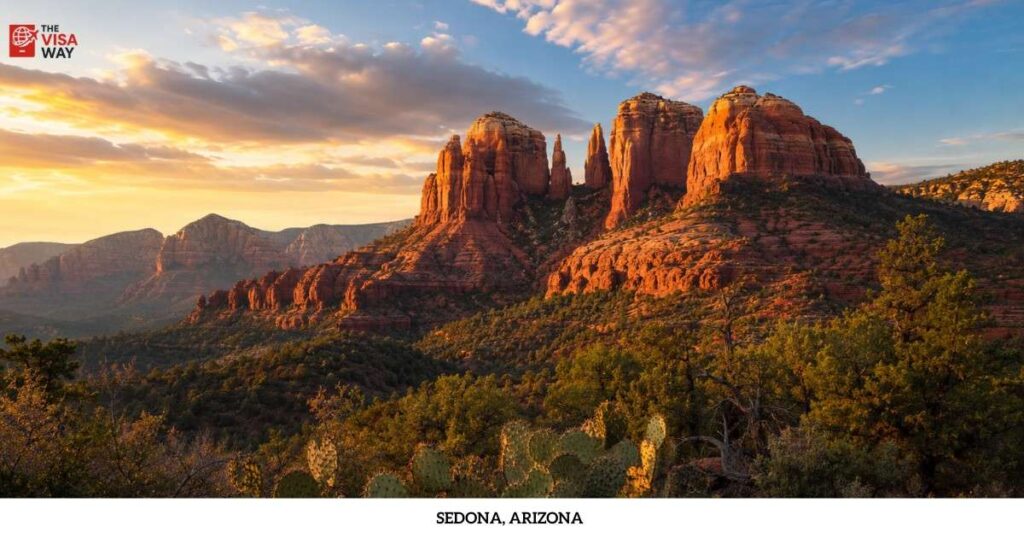
What Things Should You Do At Sedona?
- Cathedral Rock: short but steep walk up to one of the most photographed formations in the state.
- Airport Mesa: popular vortex site, ideal for sunrise or sunset with views over the whole valley.
- Oak Creek Canyon: Drive Highway 89A through it, or stop and swim at Slide Rock State Park.
- Chapel of the Holy Cross: built straight into the red rock cliffs, open to everyone regardless of faith.
- Pink Jeep Tours: an off-road tour that gets you into backcountry most cars can’t handle.
- Bell Rock and Courthouse Butte Loop: moderate trail, close-up views of both formations.
- Tlaquepaque Arts and Crafts Village: galleries, boutiques, restaurants, and a Spanish colonial-style complex.
- West Fork Trail: shaded creekside walk through Oak Creek Canyon, especially lovely in autumn.
- Uptown Sedona: the main strip for crystals, art, and souvenirs from local shops.
- Red Rock State Park: trails plus programs on the local ecology and geology.
- Devil’s Bridge: walk to the largest natural sandstone arch around here, a favorite for photos.
- Hot air balloon rides: early morning flight, aerial views over the red rocks.
- Sedona vortex sites: Boynton Canyon, Cathedral Rock, spots some believe hold spiritual energy.
Monument Valley (Utah/Arizona)
Why Is Monument Famous?
Monument Valley is known for those towering red sandstone formations, huge desert views, and being the backdrop for basically every classic Hollywood Western. It’s on Navajo Nation land, and people come from all over just to see this landscape in person.
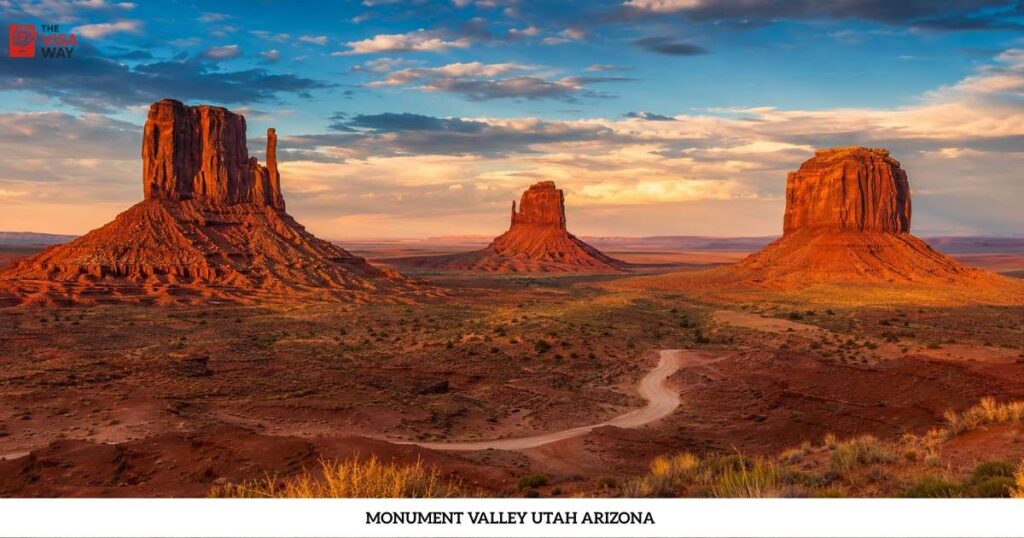
What Things Should You Do At Monument Valley?
- Scenic drive: The 17-mile Valley Drive loop takes you past the famous buttes like the Mittens and Merrick Butte.
- Guided Navajo tours: A Jeep or horseback tour with a local Navajo guide gets you into backcountry areas you can’t reach on your own.
- Walking: Wildcat Trail is the only self-guided walk here; it loops around West Mitten Butte.
- Sunrise and sunset photography: designated spots near the visitor center are the best places to catch the light changing on the rocks.
- Visitor Center exhibits: The View Hotel’s visitor center has displays and artifacts on Navajo history and culture.
- Stargazing: There is barely any light pollution out here; it’s a stunning night sky, sometimes paired with Navajo-guided astronomy programs.
- Horseback riding: Local outfitters run rides across the valley floor, a more traditional way to see the terrain.
- Cultural experiences: Local guides do weaving demonstrations, storytelling, and Navajo food tastings.
- Overnight stays: Camp at The View Campground or stay at a nearby lodge if you want more time for sunrise/sunset.
- Nearby side trips: Goosenecks State Park or Forrest Gump Point on Highway 163 are good extra stops for photos.
Lake Tahoe (California/Nevada)
Why Is Lake Tahoe Famous?
Lake Tahoe is known for that crystal-clear turquoise water, the mountains around it, and stuff to do year-round. It sits on the California-Nevada border, the biggest alpine lake in North America and the second-deepest in the whole US.
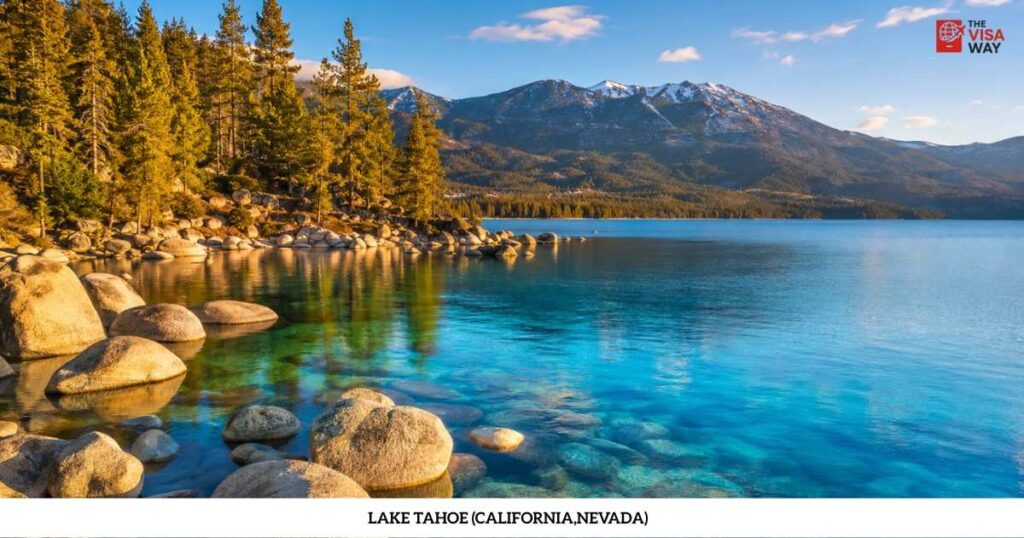
What Things Should You Do At Lake Tahoe?
- Water sports: kayaking, paddleboarding, jet skiing, and boat rentals all over the lake’s clear water.
- Beaches: Sand Harbor, Kings Beach, and Zephyr Cove are ideal for swimming and sunbathing.
- Skiing and snowboarding: Heavenly, Palisades Tahoe, and Northstar during winter.
- Scenic drives: Highway 89 loop around the lake, Emerald Bay viewpoints along the way.
- Casinos and nightlife: Stateline, Nevada side, has gaming, shows, and dining options.
- Fishing: trout and mackinaw, either from shore or by taking a chartered boat out.
- Mountain biking: trails at Northstar and around the Tahoe basin.
- Camping: lakeside and forest campgrounds; D.L. Bliss State Park is one of them.
- Cruises: Sightseeing and dinner cruises leave from South Lake Tahoe.
Napa Valley, California
Why Is Napa Valley Famous?
Napa Valley, California, is basically the top wine region in the US; over 400 wineries are here, known for legendary Cabernet Sauvignon and Chardonnay, Michelin-starred food, plus stuff like the Napa Valley Wine Train and Calistoga’s mud baths.
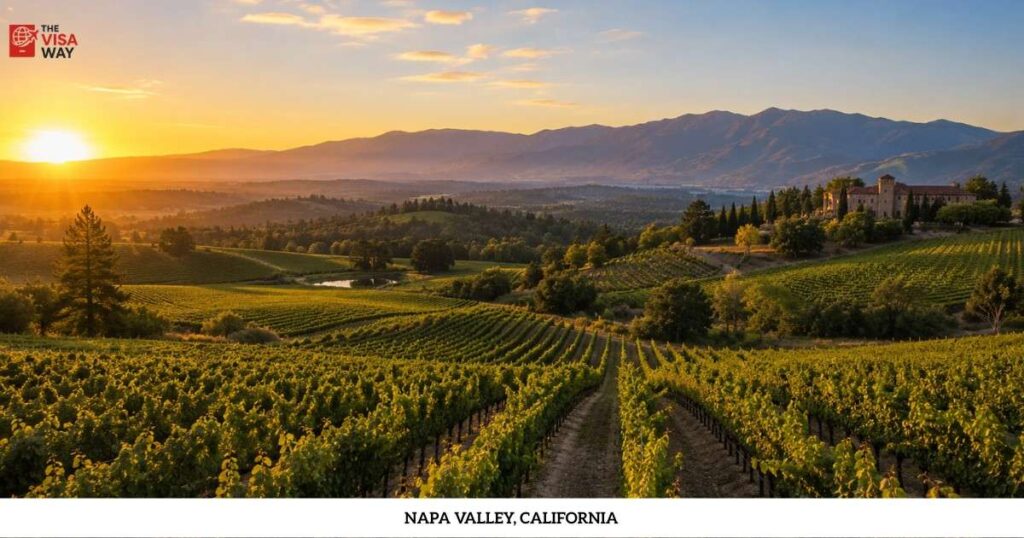
What Things Should You Do In Napa Valley?
- Wine tasting: Hit up established names like Robert Mondavi, Stag’s Leap, and Castello di Amorosa; try their flights.
- Culinary experiences: The French Laundry, Bouchon, or Oxbow Public Market, all excellent for regional food.
- Hot air balloon ride: Go early in the morning; you get panoramic views over the vineyards.
- Napa Valley Wine Train: a vintage train through wine country with a multi-course meal served while you ride.
- Spa and wellness: Solage or Meadowood does treatments with local grape seed and mud therapies.
- Scenic drives: Silverado Trail is quieter than Highway 29 but just as scenic.
- Farmers markets: Napa Farmers Market has local produce, cheese, and artisanal stuff.
- Biking tours: Cycle through vineyard paths around Yountville or Calistoga.
- Mud baths: Calistoga’s hot springs and volcanic ash treatments are a signature thing to do here.
- Downtown Napa: Walk around the Oxbow District, riverfront paths, and boutique shopping areas.
- Old Faithful Geyser of California: a lesser-known geothermal spot near Calistoga, worth the detour.
Mount Rushmore National Memorial, South Dakota
Why Is Mount Rushmore National Memorial Famous?
Mount Rushmore is known for its massive 60-foot presidential faces carved right into the granite: Washington, Jefferson, Roosevelt, and Lincoln. Gutzon Borglum sculpted it, and each face was picked to represent a chunk of America’s story: founding, growth, progress, and holding it all together.
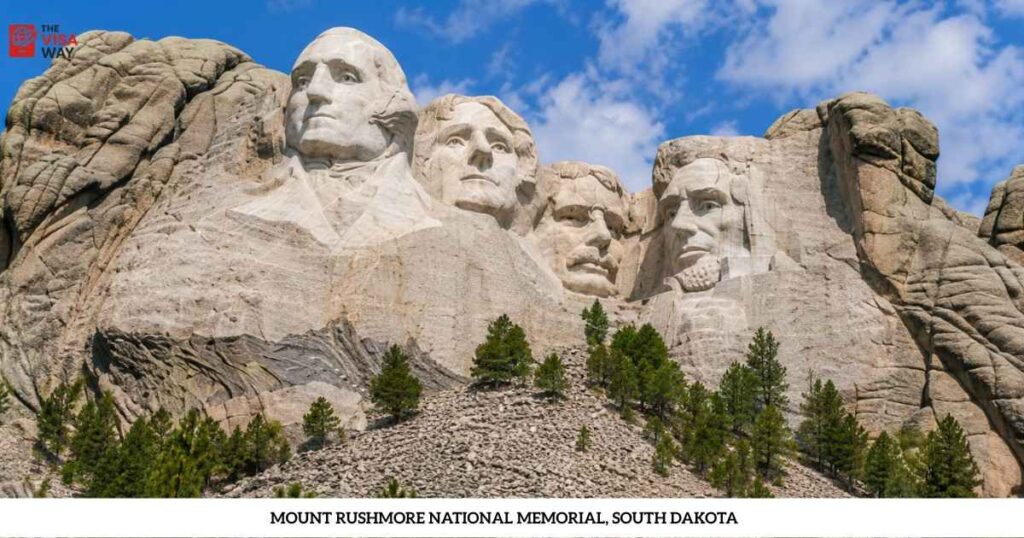
What Things Should You Do At Mount Rushmore National Memorial?
- Grand View Terrace: the main plaza, the best spot for that classic straight-on photo of all four faces.
- Presidential Trail: A half-mile loop through pines and boulders gives you different angles, even from below the sculpture.
- Sculptor’s Studio: Borglum’s actual workshop, tools, and models are still there and show how the carving actually happened.
- Lincoln Borglum Visitor Center: a museum with old photos, background history, and a short film on how it got built.
- Youth Exploration Area: Kids can do the Junior Ranger program, hands-on stuff, and earn a badge at the end.
- Evening Lighting Ceremony: runs late. From May to September, a ranger gives a talk, then the sculpture lights up as it gets dark.
- Carver’s Marketplace: South Dakota food and buffalo dishes are among the regional stuff.
- Nearby attractions: Custer State Park, Crazy Horse Memorial, and the town of Keystone are all close and easy to fit into the same trip.
Frequently Asked Questions
In spring (April to June) and fall (September to November), the weather's pleasant across most of the country. Summer's ideal for national parks and beaches; winter's better if you're into skiing or holiday destinations. Every region has its own peak season, so plan around where you are actually going.
Most international travelers need a valid B1/B2 tourist visa to get in. If your country's part of the Visa Waiver Program, you can apply for an ESTA instead. It is worth checking your country's eligibility before you plan anything. We'd suggest applying 2 to 3 months in advance.
Definitely, many people combine Zion, Bryce, and Grand Canyon in one road trip. Roads connect these parks well, so getting between them isn't a hassle. Just plan your route, book places to stay early, and check if any roads close seasonally. A national park pass can save you some money on entry fees too.
Great Smoky Mountains National Park tops the list, with over 12 million visitors a year. Easy to reach from major cities, and there's no entry fee, which helps. You get mountain views, wildlife, and old homesteads scattered around. It works whether you just want to look around or actually walk hard.
Depending on where you go, walking, wildlife viewing, scenic drives, water sports, and stargazing are all options for cultural tours. Some spots have their own signature thing, like mule rides at the Grand Canyon or hot air balloons over Napa Valley. Ranges from leisurely family walks to serious backcountry treks. Best to check each park's website for what's actually running that season.
We help with the whole B1/B2 process, document checks, mock interviews, and all of it. We make sure your paperwork's complete so things go smoothly. We can also throw in some travel tips and itinerary ideas for the top US spots. Basically, we handle the visa headache; you focus on the actual trip.
with confidence