


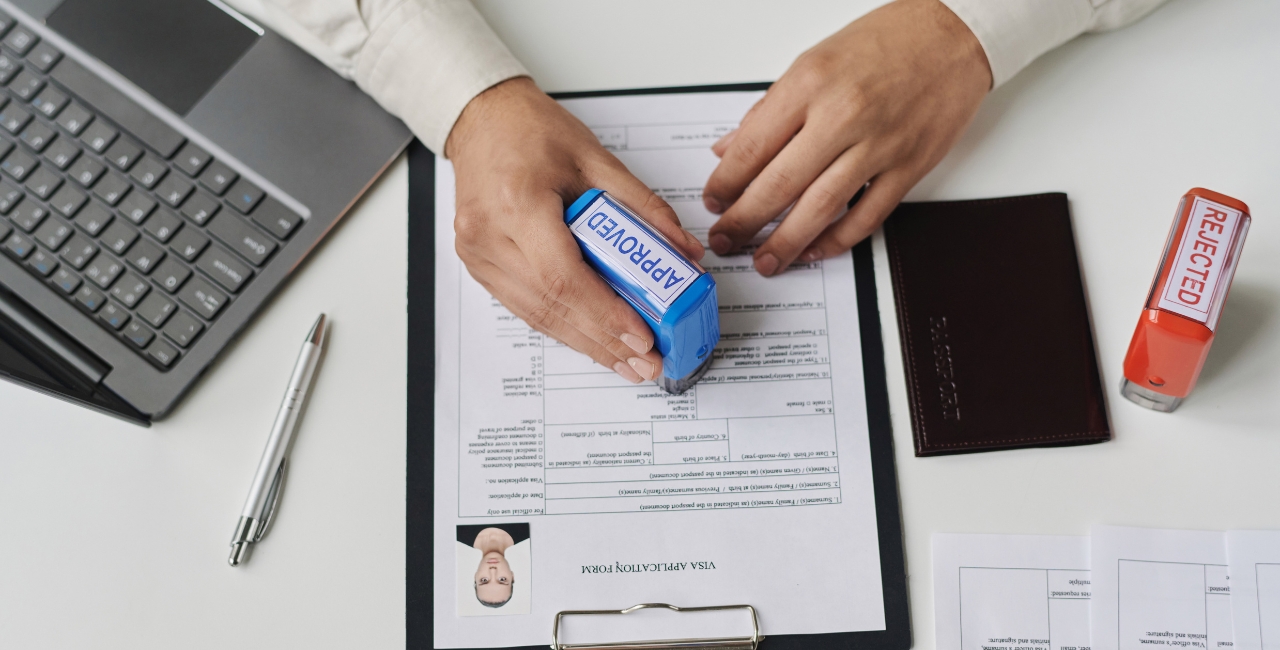

The B-1/B-2 visa interview lasts just 3 to 5 minutes. At that time, a consular officer decides whether you’ll board your flight or get a denial.
The officer just needs to verify one thing: will you come back home? Walk in with unprepared, vague plans; weak ties; shaky answers, and you give them a reason to say no.
This guide covers the most common questions, documents you actually need, and mistakes to avoid in your B-1/B-2 interview.
How Does The B-1/B-2 Visa Interview Work?
After submitting your DS‑160 online and paying the MRV fee, you schedule an interview at the nearest US Embassy or Consulate. Wait times vary significantly by location; some consulates in India, for instance, have seen wait periods exceeding several months during peak periods.
On interview day, you’ll:
- Go through security screening
- Submit documents at a window
- Speak directly with a consular officer (usually through glass) for 3 to 5 minutes
That briefness surprises most first‑time applicants. The officer has already reviewed your DS‑160. The interview is their chance to verify your story and evaluate credibility.
That’s why preparation matters so much. You don’t have time to stumble through unclear answers.
Documents To Carry For Your B-1/B-2 Visa Interview
Organize your document folder before arriving. Missing or disorganized documents create unnecessary doubt.
Essential documents:
- Valid passport (at least 6 months validity beyond your intended stay)
- DS‑160 confirmation page
- Visa appointment confirmation letter
- MRV fee payment receipt
- Recent passport‑size photograph (per consulate requirements)
- Proof of financial means (bank statements for 3 to 6 months, salary slips, ITR, or sponsor’s documents)
- Proof of ties to your home country (property documents, employment letter, business registration, family documents)
- Travel itinerary (flight bookings, hotel reservations, or a travel plan)
- Invitation letter (if visiting friends or family)
- Invitation letter (if visiting friends or family)
*Suggested: Don’t just bring documents and know what’s in them. If your bank statement shows a large recent deposit, be ready to explain where the money came from. Officers notice unusual financial activity.
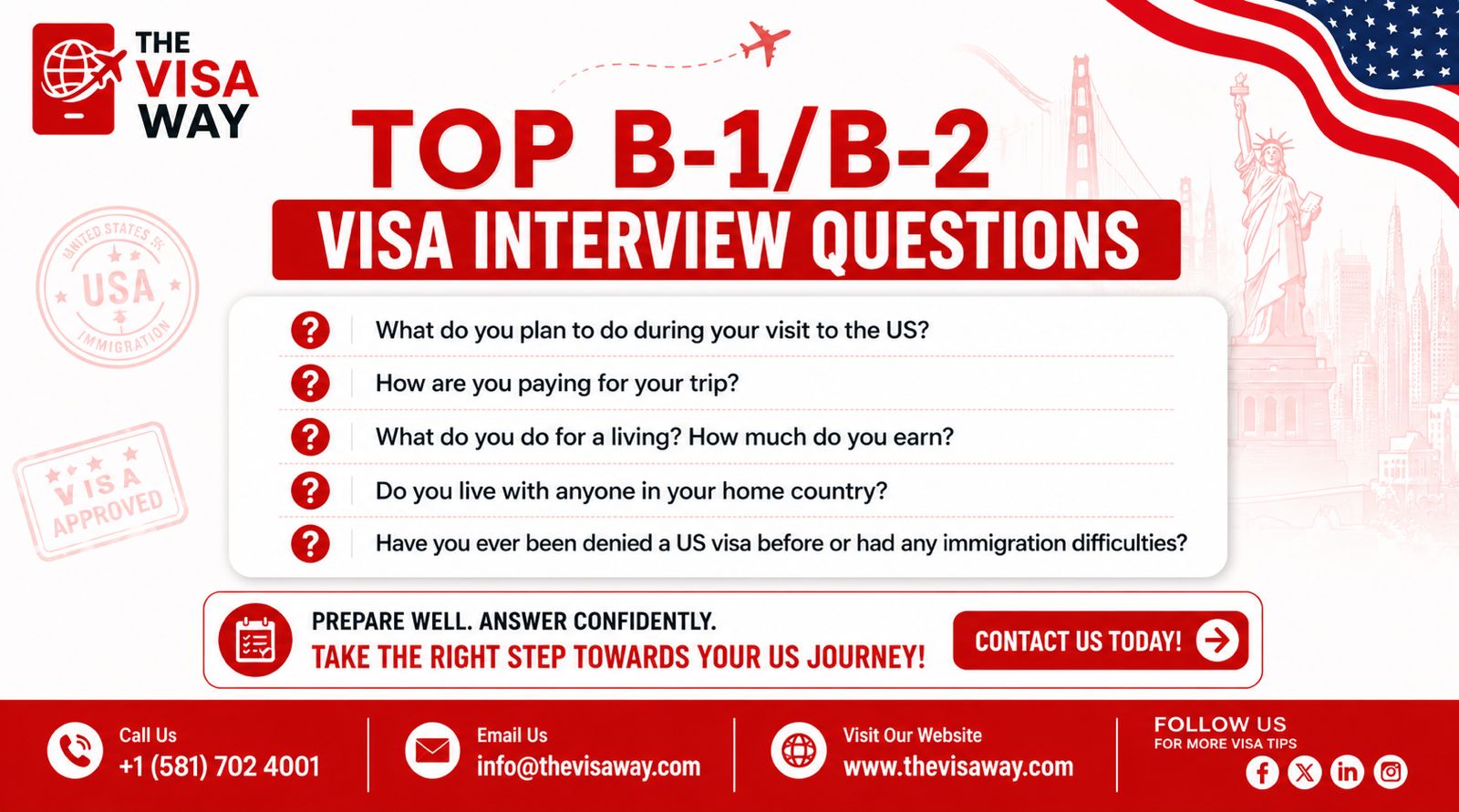
The Top B-1/B-2 Visa Interview Questions And How To Answer
These are the most common questions. Practice answering them out loud. Always be honest. Inconsistencies between your DS‑160 and verbal answers are a top reason for rejection.
1. What is the purpose of your visit to the United States?
Almost always the first question. Be specific, not generic.
- Weak: “I want to travel and see the US."
- Strong: “I’m visiting the US for three weeks to tour New York, Washington D.C., and the Grand Canyon. I’ve booked accommodations in each city.”
If visiting family, mention who and where they live.
2. How long do you plan to stay in the United States?
Give a clear, specific answer. “About three weeks” or “from July 10th to August 2nd” is far better than “maybe a month.”
If your DS‑160 said 21 days and you now say “two months,” that’s a red flag.
3. Do you have any family members or friends in the United States?
Answer truthfully. Having relatives in the US isn’t an automatic problem, but it raises questions about overstaying. Strong ties to your home country help balance these concerns.
4. Where do you work / What do you do for a living?
Mention your employer, job title, and how long you’ve worked there. If self‑employed, briefly describe your business. This question verifies ties to your home country.
5. Who is sponsoring your trip? How will you fund your travel?
If self‑funding, mention savings and monthly income. If someone else sponsors you (e.g., a relative in the US), explain clearly and mention the invitation letter and financial support documents.
Never claim someone else is funding you if they aren’t. Officers ask follow‑ups.
6. Have you visited the United States before?
If yes, mention when, how long you stayed, and that you returned on time. Clean travel history is an asset. If not, that’s fine; don’t be defensive.
7. Have you ever been denied a US visa?
Answer honestly. Denials are on your DS‑160, and lying is fatal. If previously denied, briefly explain what has changed since then (stronger finances, clearer ties, a more specific travel purpose).
8. What do you do in your home country that makes you want to return?
This is one of the most important questions. It addresses the officer’s main concern: will you overstay?
Talk about your job, family responsibilities, property, business, or anything else that anchors you to your home. Be concrete.
Example: “I manage a retail business with my brother in Chandigarh. I have a home loan there, and my elderly parents depend on me. I need to return by August 5th before my children’s school term starts.”
9. Have you applied for an immigrant visa or green card in the past?
Any prior immigrant application could suggest permanent intent. If you have never applied, say so clearly. If yes, be transparent and explain why your current trip is genuinely touristic in nature.
10. Do you have any relatives who are US citizens or permanent residents?
This ties directly to immigrant intent. Having a US citizen spouse or a pending immigrant petition is significant. Be honest and be ready for follow‑up questions.
11. Why are you going to the US specifically and not another country?
Have a real answer. National parks, college friends living there, a specific event, or any genuine reason works, but have one ready.
12. Where will you be staying in the US?
Know your accommodation plan: hotel reservations, a friend’s address, or an Airbnb. Uncertainty reads as bad planning and raises doubts.
What Consular Officers Are Really Looking For?
Under US immigration law (Section 214(b) of the Immigration and Nationality Act), every nonimmigrant visa applicant is presumed to have immigrant intent unless they prove otherwise. You must prove that you do not intend to immigrate.
The officer asks three questions:
- Is this person’s stated purpose genuine?
- Do they have the means to support themselves during the trip?
- Do they have strong enough ties to their home country to ensure they’ll return?
Every document and every answer should speak to at least one of these three concerns.
Common Mistakes That Lead To B-1/B-2 Visa Rejections
- Uncertain or inconsistent answers: The DS‑160 says two weeks; you say “maybe two months,” which raises a concern.
- Inability to explain your finances: A large bank balance means little if you can’t explain where the money came from.
- Weak ties to your home country: Unemployed, no property, no dependents, prepare strong alternative evidence.
- Overly rehearsed or robotic answers: Officers can spot memorized scripts. Prepare naturally.
- Irrelevant or excessive documents: Don’t shove 50 pages at the window. Be organized.
- Being defensive or nervous in a way that reads as dishonest: Some anxiety is normal; short, clipped answers create suspicion.
B-1/B-2 Visa Interview Tips From Experienced Consultants
- Dress professionally: it signals seriousness.
- Speak slowly and clearly, especially if English isn’t your first language.
- Answer what was asked; don't overexplain.
- If denied, don’t argue. Accept it politely and ask what could strengthen a future application.
- Practice your key answers out loud with someone.
- Bring originals, not just copies.
- Arriving early: being rushed adds to nerves.
What Happens After The Interview?
If approved: Your passport is usually returned within a few business days with the visa stamp. Some cases require additional administrative processing.
If denied: You’ll receive a refusal letter citing the law. The most common reason for denial is Section 214(b), which is a failure to overcome the nonimmigrant intent presumption. You can reapply, but first understand what was insufficient.
A Note On Reapplying After A Denial!!
A denial is not a permanent ban in most cases. You can reapply as soon as you have new or stronger evidence. Don’t reapply too quickly with the same documents that rarely leads to a different outcome. Address the specific reason for your denial.
Common Myths About the B-1/B-2 Visa Interview
| Myth | Fact |
|---|---|
| The interview takes a long time. | Most last 3 to 5 minutes. Preparation helps you use those minutes well. |
| Having relatives in the US means automatic rejection. | Many applicants with US relatives get approved. Show you plan to return. |
| You need a travel agent‑made itinerary. | A clear, self‑made plan works fine as long as it's specific and credible. |
Conclusion
The B-1/B-2 interview is straightforward. The officer checks three things: genuine purpose, enough funds, and strong ties to your home country. That’s it.
Most denials happen because applicants show up unprepared, not because they have bad intentions.
Know your story. Know your documents. Answer honestly and keep it short.
If you’re still unsure, get expert help. The Visa Way offers a free first consultation. Don’t risk those 3 to 5 minutes.
CONTACT US NOW!!!
interview with confidence
Explore More U.S. Visitor Visa & Travel Interview Resources:
Understanding B-1/B-2 Visitor Visa Eligibility, Documents & Interview Requirements
Learn how the U.S. visitor visa process works, including eligibility rules, financial proof, DS-160 filing, interview preparation, and supporting documentation required for successful B-1/B-2 visa applications.
How Section 214(b) Visa Refusals Affect Future U.S. Visa Applications
Understand the most common reasons behind 214(b) visa denials and learn what applicants can do to strengthen their next interview. This guide explains how consular officers evaluate travel intent, financial stability, and home-country ties during visa decisions.
Complete Overview of U.S. Non-Immigrant and Immigrant Visa Categories
Explore the differences between temporary and permanent U.S. visa types, including tourist, business, student, employment, and family-based immigration pathways. This resource helps applicants better understand which visa category fits their travel or long-term goals.