




The H-1B visa process is not limited to getting a job offer; it also involves fulfilling some strict prevailing wage requirements laid out by the government of the United States. Each H-1B petition has to adhere to the specific prevailing wage that depends on the profession, experience level, and work location.
The new changes in terms of minimum salaries for H-1B visas in 2026 have made many companies and skilled professionals curious about the prevailing wage rules for H-1B visas. This information could be useful for someone who plans to submit an H-1B petition or who sponsors foreign workers.
What does The actual H-1B prevailing Wage Mean?
The “prevailing wage” is one of the wage standards used for H-1B sponsorship. Employers must pay whichever is higher: the prevailing wage or the actual wage paid to similar US workers. They are hiring an international professional; it doesn’t lower the wages of similarly employed US workers.
Prevailing wages are based on four distinct skill and experience levels (Level I through level IV), as well as the specific job role and location.
What Are The Four Prevailing Wage Levels?
These prevailing wage levels are crucial because your minimum salary depends on where your role fits. Here are the four prevailing wage levels:
- Level I (Entry Level): At this level, employees who are new to the field are needed as "trainees" or junior staff. It has been the lowest bar to clear, but it's about to get significantly harder.
- Level II (Qualified): This level is for those with some experience. You're not just following orders; you actually get the "why" behind what you're doing.
- Level III (Experienced): You have advanced degrees or years of experience. You solve tough problems on your own and may also guide or supervise others.
- Level IV (Fully Competent): You are the expert people turn to for advice. You lead projects, manage teams, and decide how the work gets done. You set the standards.
Step-By-Step Process Of How Prevailing Wage Is Actually Calculated?
Step 1: Figure Out Your Job Role
First, they need to categorize your job. The government uses something called an SOC code. But it is really just a label for your profession. If you are a software engineer, you get one code. If you are a marketing manager, you get a different one. It helps the government know exactly what kind of work you do.
Step 2: Pick Your Location
Where you work matters a lot. The prevailing wage changes based on the city, county, or area where your job is located. Why? Because living costs are different everywhere. One hundred thousand dollars in San Francisco? Just enough. One hundred thousand dollars in Dallas generally provides more purchasing power than it does in San Francisco. So yes, location plays a big role.
Step 3: Look At The Official Wage Data
Now the employer checks the government’s official numbers. The DOL uses something called the OEWS survey, which stands for Occupational Employment and Wage Statistics, from the Bureau of Labor Statistics. Basically, it is a large database showing what workers earn across the country. It helps determine the minimum wage required for your position.
Step 4: Use The Government’s Online Tool
All this data is available online. The employer just goes to the FLAG website, which stands for Foreign Labor Application Gateway, and uses the OFLC Wage Search tool. They punch in your SOC code and location, and the system shows the prevailing wage for your specific situation.
Step 5: Try Private Wage Surveys
Employers do not have to depend only on government data. They can also use private, independent wage surveys if they meet certain standards. If the survey meets the Department of Labor’s standards, employers may use it instead of government wage data. It is worth asking your employer whether this option applies.
Step 6: File The Official Request
Finally, the employer submits Form ETA-9141 to the National Prevailing Wage Center, or NPWC. This is where they officially request a prevailing wage determination. The NPWC reviews everything and issues the final, official wage number.
H1B Visa Minimum Salary Requirements In 2026
On March 27, 2026, the Department of Labor published a major proposed rule on prevailing wage calculations. They want to entirely change how these wages are calculated. This is not a small change. It is the biggest rebuild in over twenty years. We are talking about a major change.
The government says too many companies have been misusing the H-1B program. They want to make sure foreign workers get paid fairly, just like American workers in similar roles. So they are raising the standards.
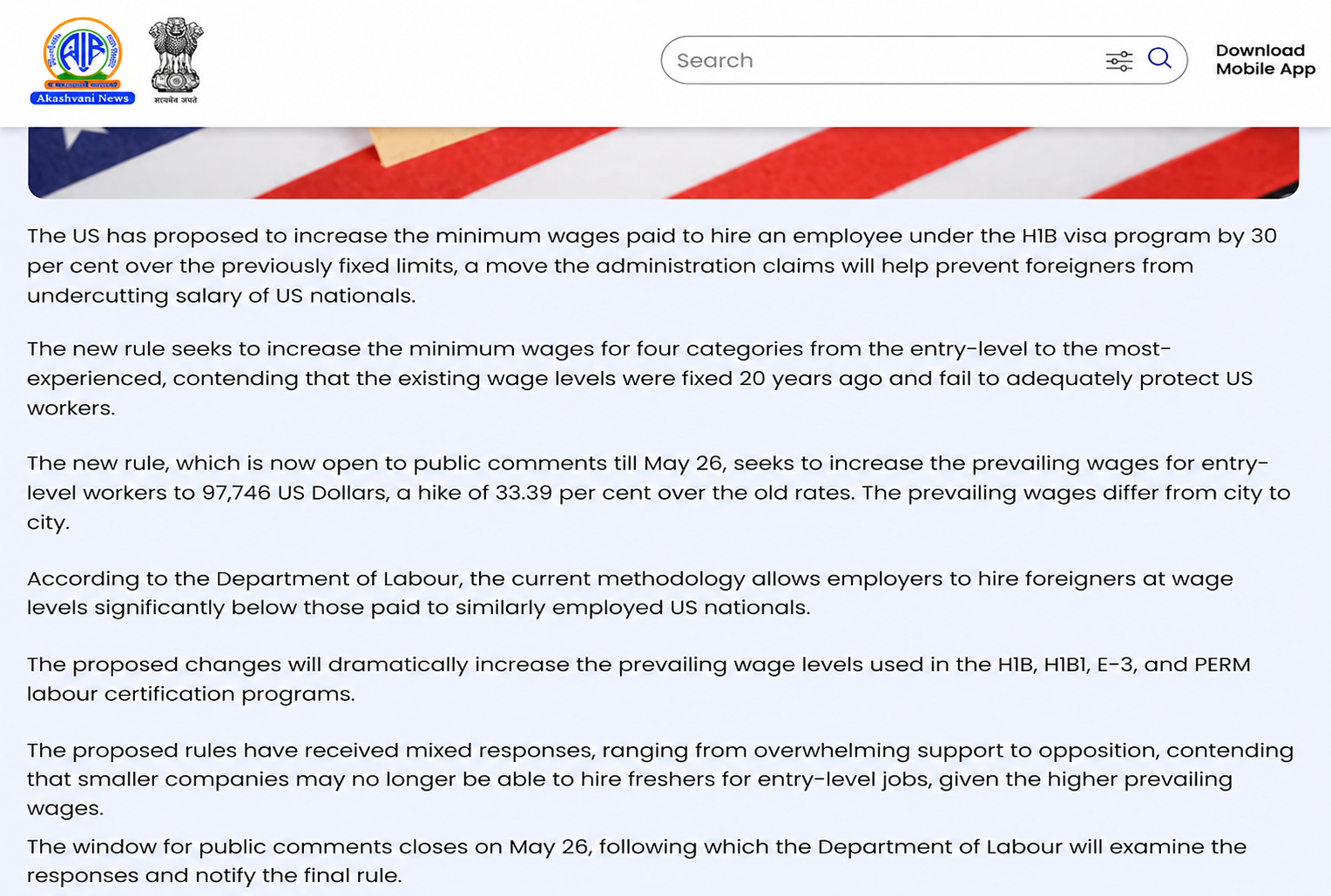
Image Credits: Newsonair.gov.in
Old vs. New Percentile Thresholds
The DOL calculates wages based on percentiles within the Occupational Employment and Wage Statistics (OEWS) survey data provided by the Bureau of Labor Statistics. The new proposal makes a significant change:
| Wage Level | Current Percentile | Proposed Percentile | Estimated Salary Impact |
|---|---|---|---|
| Level I (Entry) | 17th | 34th | 30-33% Increase |
| Level II (Qualified) | 34th | 52nd | 18-24% Increase |
| Level III (Experienced) | 50th | 70th | 20-25% Increase |
| Level IV (Fully Competent) | 67th | 88th | 17-22% Increase |
Data is sourced from DOL analysis for fiscal years 2020-2024.
When Does This Go Into Effect?
The DOL published the Notice of Proposed Rulemaking (NPRM) on March 27, 2026. The 60-day public comment period officially closed on May 26, 2026.
Regardless of the proposed rule, the Department of Labor typically updates prevailing wage data each year around July 1. Any LCA filed from July 1, 2026, will use the new annual wage levels. Even if the proposed rule is not finalized, updated prevailing wage data may apply to LCAs filed after the annual July update, depending on the occupation and location.
If it is finalized as written, it will only apply to:
- New Labor Condition Applications (LCAs)
- New Prevailing Wage Determination (PWD) requests filed on or after the effective date.
*Important Note: The DOL has stated that the changes will not be applied. If you have an approved LCA or PERM application, you are safe until it expires. Nobody knows the exact date yet. The rule could become official as early as late 2026, but it might also face legal challenges like similar rules have in the past. That said, do not count on a delay. The current administration is clearly pushing for this change, so you should treat it like it is happening soon. Plan ahead and do not delay.
How To Prepare For The H-1B Salary Changes In 2026
1. Negotiate with Realistic Numbers
Look up what people in your role and city actually get paid. Do not rely on old salary data from 2025. Know your worth and negotiate accordingly.
2. Check If Your Employer Is Ready
Is your employer even aware of these changes? Many companies have no clue what is coming. They might need to adjust your offer to meet the new requirements.
3. Move Fast
If an employer says they will sponsor you, push them to start the paperwork right away. Delays may affect which prevailing wage data applies to your case. If you’re eligible to file, starting the process early can help avoid unnecessary complications.
4. Know Your Rights
You need to understand what the prevailing wage is for your specific role and location. Do not sign anything without verifying that your salary meets the legal minimum. It is your future on the line.
5. Stay in the Loop
Things are changing quickly. Stay updated on the latest DOL rule changes. Follow the news. Talk to people who know. You do not want to catch yourself off guard.
6. Get Expert Help
If you are confused or unsure about your visa paperwork, it is best to get help. The team at The Visa Way can walk you through everything. They offer a free first consultation to help you understand how these new rules might affect your case.
What Happens If The Employer Pays Below The Prevailing Wage?
Paying less than the required wage is not a small mistake. It is a serious violation of US labor law. And the consequences are serious.
For the Employer:
Back Wages and Fines
If an employer feels uncomfortable, they have to pay back every dollar to their workers. On top of that, they face heavy fines. In one real case, a company had to pay over $120,000 because they systematically underpaid their H-1B employees.
Debarment
Debarment means the employer loses the right to sponsor any new H-1B visas for a certain period, usually one to three years. Imagine a company that relies on foreign talent suddenly losing the ability to hire them. This can destroy the employee’s career and damage the company’s reputation.
Increased Scrutiny
Once a company receives a violation, the government marks it for scrutiny. They will face more audits and investigations in the future. The Department of Labor will monitor them closely.
For the Employee:
Loss of Status
Your visa status is tied to your employer’s compliance. If they break the rules, your H-1B status can be questioned or even canceled. You may have to leave the country.
Personal Liability
Even though the employer is mainly responsible, you are still liable. If someone questions your status, you face uncertainty about your legal right to stay and work in the US.
*Important Note: The employer must pay the higher of the prevailing wage or what they pay comparable US workers. If the required wage rules are not met, the petition may be denied or the employer may face compliance action. Also, the employer cannot split the cost with you or deduct legal fees from your paycheck.
Conclusion
The DOL’s proposed rule could push entry-level salaries up by over 30%, and even if that doesn’t pass, the July 1 annual wage refresh is coming anyway. For professionals, that means pushing your employer to file those LCAs now before the window closes.
Don’t assume old rules still work. And whatever you do, check the prevailing wage for your specific role and city before you sign anything. The clock is checked, but you still have time to get it right. Stay informed, plan ahead, and review the latest wage requirements before moving forward with your H-1B application, and if you’re unsure about anything, get expert help from us!
H1B salary obligations
Continue Exploring
Explore more H-1B visa filing guidance, salary requirement resources, and USCIS petition support information.