


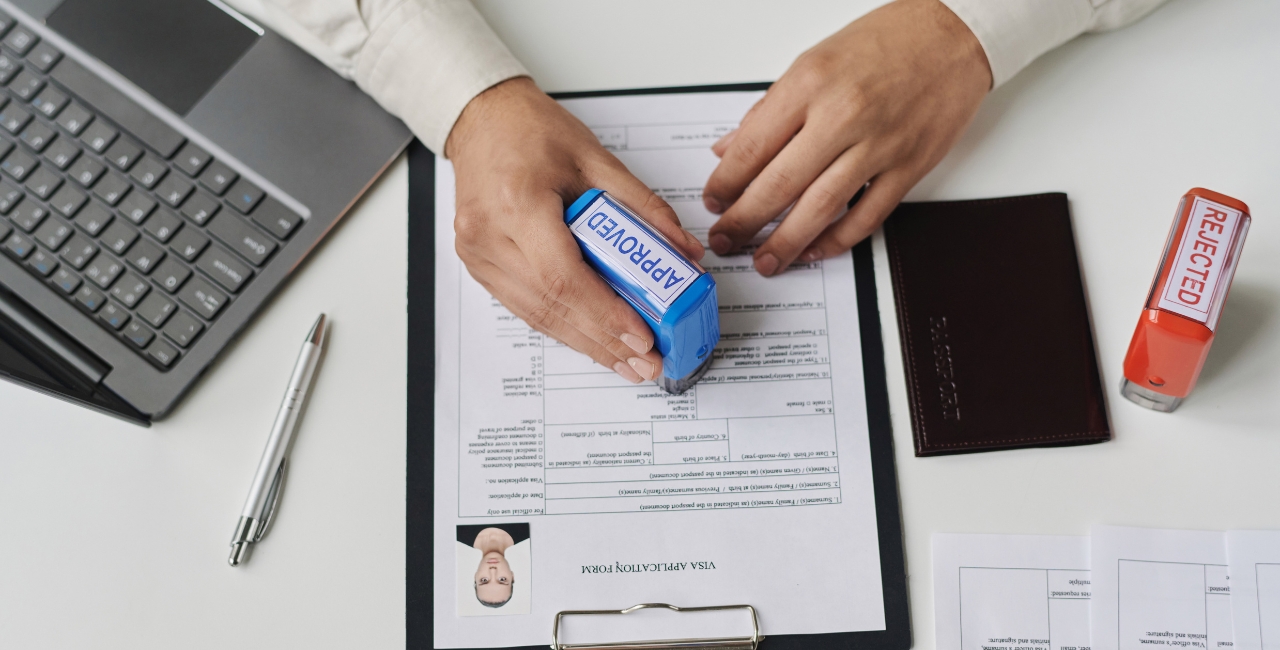

Every year, thousands of genuine travelers walk into US embassies with perfect documents, strong bank statements, solid job letters, and confirmed plans and still get rejected. Their paperwork isn’t the problem. The problem is a 15-page online form they filled out too quickly, weeks before the interview.
The DS-160 form may seem like just another administrative step, but it is actually one of the most powerful things visa officers use. It is designed to capture small mistakes, hidden gaps, and unexpected challenges. And in 2026, with stricter security checks in place, even a small error can cost you your visa.
One wrong date. One misunderstood question. One rushed answer. Any of these can trigger a red flag that is nearly impossible to recover from.
This guide walks you through the DS-160 step by step and explains what visa officers are really looking for.
Approval for US visas depends not on how strong your profile looks but on how carefully you fill out the DS-160 form.
What Is The DS-160 Form And Why Does It Matter So Much?
The DS-160 is the US Department of State’s official online nonimmigrant visa application. It’s the foundation of your visa case. When you arrive at the US consulate or embassy for your interview, the officer will see your DS-160 on their screen. Every answer you’ve given about your travel history, your employment background, and your family details.
It’s not just a data collection form. It’s a committed statement. When you submit it, you’re legally certifying that everything inside is true and accurate. Errors, even minor ones, can raise concerns about credibility.
The form is available on the Consular Electronic Application Center (CEAC)
Who Needs To Fill Out the DS-160?
Almost everyone applying for a US nonimmigrant visa needs to complete a DS-160. This includes:
- B-1/B-2 visa (business/tourist)
- F-1 and M-1 visa (student)
- J-1 visa (exchange visitor)
- H-1B, H-4 visa (work and dependent)
- L-1 visa (intracompany transfer)
- O, P, R, and other specialty visas
The only major exception is immigrant visa applicants, who use a different form (DS-260). If you’re applying for a green card through a US consulate abroad, that’s a different process entirely.
Step-by-Step: How To Fill Out The DS-160 Form In 2026
Let’s go through the form section by section. The layout hasn’t changed dramatically from 2025, but the CEAC system did update its interface.
Step 1: Create Your Application at ceac.state.gov
Go to ceac.state.gov ; the website got a small upgrade in 2026 that catches some typos for you, and select the US Embassy or Consulate where you plan to apply. This location choice matters; once set, it determines which mission processes your application. You can change it later if needed, but it resets some sections.
You’ll be given an application ID number. Write it down immediately. If you close the browser without saving, this ID is how you retrieve your application. Treat it like a password.
Step 2: Personal Information
This section covers your full name, other names you’ve used, date of birth, place of birth, nationality, and national ID numbers.
Common mistakes here:
- Entering your name in a different order than your passport (DS-160 follows passport format: Surname / Given Name)
- Forgetting to list name changes from marriage or legal proceedings
- Using abbreviations or nicknames
Enter your name exactly as it appears in your passport, character for character. If your passport shows “MOHAMMAD,” don’t write “MUHAMMAD.”
Before you move to Step 3, check your passport expiry date.
If your passport is expiring in the next 6 months, get a new passport first. Then come back and fill out the DS-160. Why? Because the US won’t give you a visa that outlasts your passport. It’s simple: if you already filled out the DS-160 with your old passport details but show up with a new passport at the interview, what happens? Now you have two passports, a mismatch, and an officer who needs an explanation. Avoid such a situation.
Step 3: Travel Information
This section asks about your intended travel dates, length of stay, and US address during your trip.
If you don’t have a confirmed itinerary yet, which is common for tourist applicants, you can list estimated dates. Write “VARIOUS” or a reasonable estimate. The consular officer knows these can change; what matters is that you’re not contradicting your stated purpose.
For the US address, you’ll need to provide where you plan to stay. If you’re visiting friends or family, use their address. When you stay at a hotel, be sure to use its address. Don’t leave it blank.
Step 4: Travel Companions
If you’re travelling with family members or a group, indicate that here. If each person is filing separately (which they must, as there’s no family DS-160), mark that you’re travelling with others and list them.
Step 5: Previous US Travel
List every trip you’ve taken to the United States. Dates, visa types, lengths of stay, and all of it.
This section is one of the most error-prone areas in the entire form. People forget trips from years ago, especially short ones. The US immigration system has records. If their records show a trip you didn’t list, it looks like you were hiding it. Even if you just forgot, that’s a hard thing to explain at a visa window.
Tip: Pull out your old passports, check your phone photo library for travel memories, and look up old booking confirmations if you need to reconstruct dates. Accuracy here matters more than in almost any other section.
Step 6: US Point of Contact
The US Point of Contact is the person or organization in the US who is sponsoring, hosting, or simply knows you’re visiting. This could be a university, a company, or a personal contact.
If you don’t have a personal contact, it’s acceptable to list your hotel or the organization you’re visiting. Don’t create a contact or use a random address you found online; this will raise a serious concern if the officer tries to verify it.
Special Warning for J-1 Visa Applicants Only
If you are applying for a J-1 visa (exchange visitor), stop and read this warning.
The DS-160 asks, “Are you subject to the 2-year home residency requirement?”
Many applicants mark ‘No’ without checking their eligibility. If your visa or DS-2019 form says ‘subject to 212(e)’ anywhere, answer ‘Yes.’ A wrong answer here can get you rejected. Worse, it can cause problems for future visas. Not sure? Check your DS-2019 form. The stamp is usually there.
Step 7: Family Information
The form asks about your parents’ names, nationalities, and whether they’re US citizens or permanent residents. It also asks about your spouse (if applicable) and children.
Some applicants skip the spouse section if they’re estranged or separated. Don’t. “Legally married” means married regardless of the state of the relationship. List your spouse.
Step 8: Work / Education History (Past 5 Years)
This section asks for your current and previous employers, job titles, dates, salaries, and supervisors’ contact information. It also covers your educational background.
Be consistent across your resume, LinkedIn, and any supporting documents you’re submitting. Gaps in employment should be explained as “between jobs,” “family caretaker,” or “freelance work” rather than omitted.
For dependent visa applicants (H4, L2, F2), this one is for you:
Do not leave the employment history section blank. Yes, you heard that right. Do not leave it blank. If you don’t have a job right now, select ‘Not Employed.’ Then write a reason: ‘Homemaker’ or ‘Will seek work authorization after EAD (for H4/L2)’ or ‘Not permitted to work under visa status’ (for F2). A blank field can cause a system error or confuse the officer. Just write one line. But don’t leave it empty.
Step 9: Security and Background Questions
This is the section that makes most applicants nervous. It’s a long list of yes/no questions covering things like the following:
- Have you ever been arrested or convicted of a crime?
- Have you ever been involved in terrorist activities?
- Have you ever overstayed a US visa?
- Do you have a communicable disease?
For the vast majority of applicants, all answers are “No.” Answer honestly. If you do have something to disclose, a minor arrest or a prior overstay, consult an immigration professional before submitting. These situations aren’t automatically disqualifying, but how you handle them matters enormously.
One more thing about this section: social media handles.
Yes, that question is real. The DS-160 still asks for your Facebook, Instagram, Twitter, and LinkedIn handles. Many applicants think, “I’ll skip it” or “I’ll use a fake handle.”
Wrong move. As of March 2026, officers can require you to make your profiles public before they approve your visa. What if you wrote ‘none,’ but your Instagram is public? Problem.
Don’t make up fake handles. List every account you’ve touched in the past five years, even the dead ones. Controversial posts are usually ignored, but what happens if your profile openly speaks against studying in the US? That’s a red flag. Be honest. And maybe keep your social media boring for a while.
Step 10: Upload Your Photo
The DS-160 requires a recent colour photograph that meets US visa photo requirements:
- Taken within the last 6 months
- White or off-white background
- Full face, front view, no glasses unless you have a medical certificate. But avoid glasses even then.
- Between 600x600 and 1200x1200 pixels
- JPEG format, under 240KB
Photo rejections are common and preventable. Use a professional service or an app specifically designed for US visa photos if you’re unsure.
Step 11: Review and Sign
Before submitting, go through every page. Pay special attention to dates, passport numbers, and the spelling of names. Once submitted, you cannot edit the form; you can only start a new one.
When you’re satisfied, click “Sign Application” and proceed to submission. You’ll get a confirmation page with a barcode; print the page or save it as a PDF. You’ll need to bring this barcode with you to your interview.
Top 5 Mistakes That Get DS-160 Applications Rejected
Now for the most important part. These aren’t unclear technicalities; they’re the actual patterns that immigration professionals see repeatedly, and they directly damage applications.
Mistake #1: Inconsistent Information Across Documents
The DS-160 is not an isolated document. Consular officers cross-check it against your passport, your visa application fee receipt, your appointment confirmation, your supporting documents, and occasionally your social media.
If your DS-160 says your employer is “XYZ Technologies” but your bank statements show salary from “XYZ Tech Pvt Ltd,” that’s a discrepancy. If your stated travel dates don’t match your flight booking, that’s a discrepancy. These inconsistencies, even if they are explainable, can raise doubts.
Before you submit your DS-160, lay out every document you plan to bring to the interview and ensure that the information is consistent. Names, dates, employers, and addresses should all align.
Mistake #2: Incomplete or Unclear Travel History
The form asks for previous travel to the US and to other countries. Applicants regularly underreport. They forget the quick trip to Malaysia in 2019 or the transit through Dubai that lasted two days.
Through partnerships with many countries, the US immigration system has access to international border records. Beyond that, your passport has entry/exit stamps. Omissions look like deliberate concealment.
List every trip. If you’re genuinely unsure of exact dates, provide your best estimate and be ready to explain the approximation at your interview.
Mistake #3: Misunderstanding the “Purpose of Trip” Field
This question sounds straightforward, but it causes serious problems. The purpose of the trip must match your visa category. If you’re applying for a B-2 tourist visa but your stated purpose sounds like work or study, the officer may conclude you’re misrepresenting your intentions.
Common traps:
- Visiting for a "short course" when on a B visa (this can be tourism, but it must be clearly framed)
- Listing "business meetings" on a tourist visa application
- Unclear answers like "personal" with no context
Be specific and accurate. “Visiting family in New York for 3 weeks” is clear. “Tourism and sightseeing in multiple states” is clear. Match your stated purpose to your category and your supporting documents.
Mistake #4: Not Disclosing Prior Visa Refusals
One of the questions in the DS-160 asks whether you’ve ever been refused a US visa or been refused admission at a US port of entry. Many applicants answer “No” to this question, either because they’re embarrassed, they think it’ll hurt their application, or they genuinely didn’t realize a refusal was formally recorded.
US visa records are permanent. They don’t get deleted. So if you got refused in 2018 and you answer “No” in 2026, that’s not a mistake anymore. That’s misrepresentation; that’s way worse than the original refusal ever was.
Briefly explain the circumstances of the refusal if asked. A prior refusal with an honest explanation is manageable. A discovered lie is not a lie.
Mistake #5: Rushing the Photo or Skipping the Confirmation Barcode
Two quick-fix items that surprisingly derail applications:
Photos: A photo that doesn’t meet the technical requirements will be flagged during the upload process or at the interview. Common failures include dark backgrounds, glasses, partial faces, or images that are too small. If your photo is rejected at the embassy, your appointment may need to be rescheduled.
Barcode confirmation: The DS-160 confirmation page with the barcode is your admission ticket. Without it, you cannot check in for your interview. Do not assume the consulate can look it up; some missions will turn you away. Print it or have it accessible on your phone.
Mistake #6: Not Disclosing a Cancelled Visa (Even If You Did It Yourself)
The DS-160 asks, “Has your US visa ever been cancelled?” Many applicants think, ‘I requested the cancellation myself, so I don’t need to mention it.’ Wrong. If your visa was ever cancelled, whether you requested it or the embassy did, answer ‘Yes.’
Here’s the difference you need to know:
- "Cancelled without prejudice" = less serious. It means there was no violation. Example: your passport got full, or you applied for a different visa category.
- "Cancelled with prejudice" = serious. It means there was a violation. Future visas become very difficult, and you may need a waiver.
- Not sure which one you had? Check the stamp in your old passport. It's written there. A wrong answer here = permanent record of misrepresentation. And that is worse than a 214(b) refusal.
What Happens After You Submit The DS-160?
Once your DS-160 is submitted:
- You pay the visa application fee (MRV fee), currently $185 USD for most B, F, J, and H visa categories. If you’re an Indian applying for a B1/B2, there’s a new $250 fee on top of that as of 2026 (verify the current amount at travel.state.gov because fees change).
- You schedule your visa interview at the US Embassy or Consulate.
- You attend the interview and bring your confirmation barcode, passport, fee receipt, and supporting documents.
Processing times vary by country and visa category. For some consulates, wait times for interview appointments run several weeks or months. Start early.
After Visa Approval: What's Next?
Good news. But you’re not done yet.
1. Passport stamping: You’ll submit your passport at the consulate. It usually takes 3-7 business days, but it may take longer during peak seasons.
2. Check your visa sticker: When you get your passport back, open it immediately. Check:
- Your name (spelled exactly like passport)
- Visa dates (valid from / valid until)
- Visa category (B1/B2, F1, etc.)
If anything is wrong, contact the consulate the same day.
3. Travel to the US: You can travel only during the valid dates. Not before. Not after.
4. I-94 record: After you enter the US, check your I-94 online at cbp.gov/i94. Make sure your admitted-until date matches your visa purpose.
DS-160 Tips That Most Guides Don't Tell You
- Don't use autofill: Browser autofill has caused applicants to enter old addresses or incorrect phone numbers accidentally. Type manually or verify every autofilled field.
- Keep a copy of your answers: Before submitting, photograph or screenshot each page. You'll need to recall your answers accurately at the interview if the officer asks follow-up questions.
- Children applying for visas: Still need separate DS-160 forms; parents must complete them on their behalf.
What If You Submit The Wrong DS-160?
It happens. Don’t panic. Here’s precisely what to do:
Step 1: Go back to ceac.state.gov and start a new DS-160 application.
Step 2: Fill it out correctly this time. You’ll get a new barcode (new application ID).
Step 3: When you go for your visa interview, bring only the new confirmation page with the new barcode.
*Important: You don’t need to cancel the old DS-160. The system will see both. Just use the new one. If the officer asks, say, “I realized there was an error, so I submitted a corrected form.”
What not to do: Don’t show up with two different barcodes. That confuses everyone.
To Sum Up
DS-160 is a screening tool, and for most applicants, filling it out correctly is simply a matter of being careful, consistent, and honest.
Every visa case is different. Travel history, visa refusals, gaps in employment, and complex family situations: these aren’t things a checklist fully handles. If your situation is even slightly complicated, a 30-minute conversation with a professional beats hours of second-guessing.
The team at The Visa Way works with applicants at every stage, from form guidance to interview preparation.
If you’d like a professional review of your DS-160 or just a clear-eyed assessment of your application, your first consultation is free of cost. Just get honest, expert guidance when you need it.
we’ve seen too many excellent applications get rejected because of small mistakes on this form. Don’t let yourself become that person.
GOOD LUCK!!
with confidence
Continue Reading
Explore more U.S. visa guidance, DS-160 preparation resources, and non-immigrant visa information.
DS-160 Form Guidance for B1/B2 Visas
Learn how to accurately complete the DS-160 application for U.S. tourist and business visas, including travel history disclosures, social media details, document consistency, and common interview concerns.
Understanding 214(b) Visa Refusals
Discover what Section 214(b) refusals mean and how applicants can strengthen future U.S. visa applications through stronger ties, financial evidence, and DS-160 consistency.
U.S. Visa Categories Explained
Explore major U.S. non-immigrant visa classifications including B1/B2, F1, H1B, J1, and employment-based visas, along with eligibility and interview expectations.